
DTF vs HTV (Heat Transfer Vinyl): A Cost & Detail Showdown
Jul 3, 2026 (Updated on Oct 8, 2026)
Heat transfer vinyl (HTV) was the dominant home and small-shop decoration method for years before DTF became widely accessible.
Both methods use heat to bond decoration to fabric. Both are applied with a heat press or iron. Beyond that, they are fundamentally different processes with different strengths, different limitations, and different economics. Here is the direct comparison.
In this comparison
- How each method works
- Color and design capability
- Setup and production workflow
- Cost comparison by volume
- Detail capability
- Durability, including stretch fabrics
- When to still use HTV
- How to switch from HTV to DTF
- FAQ
Quick Comparison: DTF vs HTV
| Factor | HTV (Heat Transfer Vinyl) | DTF (Direct to Film) |
|---|---|---|
| Color capability | Solid colors only, one layer per color | Full color, gradients, photos in one press |
| Process | Cut, weed, layer, press | Print, powder, cure, press |
| Equipment | Cutting machine + weeding tools | DTF printer or transfer supplier |
| Fine detail | Limited by blade path and weeding | Limited by print resolution (300 DPI) |
| Small text | Struggles under about 0.5 inch | Readable under 0.25 inch |
| Stretch fabric | Can crack or peel | Flexes with the fabric |
| Wash durability | Good on cotton, weaker on stretch | 50+ wash cycles with correct care |
| Best use | Single-color, low volume, specialty finishes | Multi-color, detail, any real volume |
How Each Method Works
HTV
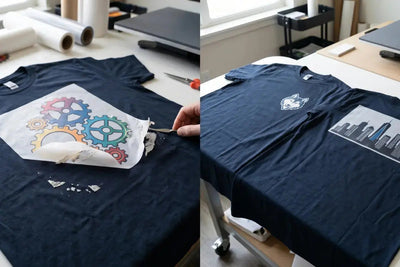
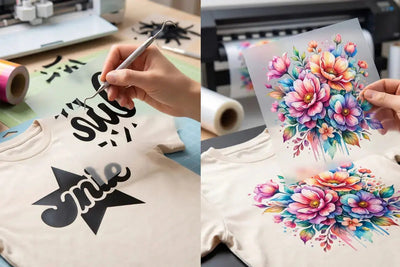
A vinyl film with a heat-activated adhesive backing. The design is cut from the vinyl sheet using a cutting machine (Cricut, Silhouette, Roland cutter). Unwanted vinyl is weeded away manually, leaving only the design. The design is then pressed onto the garment adhesive-side down. The vinyl film bonds to the fabric under heat and pressure.
DTF
A full-color design is printed onto a polyester carrier film using inkjet-style DTF printing equipment. Hot-melt adhesive powder is applied to the wet ink surface and cured. The finished transfer is pressed onto the garment. No cutting machine required. No weeding required. The design is printed, not cut.
Color and Design Capability
HTV
Limited to solid colors. Each color is a separate layer of vinyl, cut and applied separately. A 3-color design requires 3 separate vinyl cuts, 3 weeding sessions, and 3 press operations with precise registration. Gradients, photos, and full-color designs are not possible with standard HTV. Specialty multi-color and printed HTV products exist but add cost and complexity.
DTF
Full-color, photographic, gradient, and multi-element designs in a single press. A 12-color design with drop shadows, gradients, and fine detail prints exactly the same as a simple 2-color logo. No additional cost for color complexity.
Winner for color and detail: DTF, clearly. Any design more complex than 2 to 3 solid-color elements is faster and more accurate in DTF.
Setup and Production Workflow
HTV
Requires a cutting machine and design software compatible with cut files. Designs must be set up as solid-color cut paths, not raster files. Weeding is manual and time-consuming on complex designs or small text. Registration for multi-color layered designs requires precision. Total production time per piece is higher than DTF for complex designs.
DTF
Requires a DTF printer (or a transfer supplier) and a heat press. Design setup involves standard graphics software (Photoshop, Illustrator, Canva) in raster or vector format. No cutting machine, no weeding. Send the file, receive the transfer, press it. Production per piece is faster than layered HTV for designs with more than one color.
For shops buying transfers (not printing their own): HTV requires you to do the cutting and weeding yourself. DTF transfers arrive ready to press: no cutting, no weeding, nothing but pressing. The production workflow comparison is not close for ready-to-press buyers.
Cost Comparison
The cost comparison depends on who is doing the production and at what volume.
HTV materials
Vinyl sheets are relatively inexpensive per square foot. A cutting machine has a one-time equipment cost. For very simple single-color designs at low volume, HTV material cost per piece is low.
HTV labor
Weeding a complex design takes time. Multi-color registration takes time. Per-piece labor on HTV is higher than on DTF for anything beyond single-color simple shapes.
DTF transfers (purchased)
Transfer cost is based on print size and quantity. For multi-color designs, DTF transfer cost per piece is competitive with HTV when you factor in labor, because the production step after receiving the transfer is just pressing: no weeding, no layering.
At volume: DTF economics improve significantly with volume. Gang sheet ordering reduces DTF transfer cost. HTV weeding labor does not decrease with volume. It scales with piece count. At production volume, DTF wins on total cost for any design with more than one color.
For single-color simple designs at very low volume: HTV may still be the lower total-cost option if you already own the cutting equipment. The break-even depends on your specific volume and design complexity.
Detail Capability
HTV
The minimum detail is limited by the cutting machine blade path. Very small text (under about 0.5 inch tall), thin lines (under about 1/16 inch), and fine detail elements cannot be cut cleanly in vinyl. The weeding process also removes any isolated interior sections. A letter "O" or "A" requires an island weed that is difficult in very small sizes.
DTF
Minimum detail is limited by print resolution. At 300 DPI, extremely fine lines, small text (under 0.25 inch is readable), and photographic detail all print. The adhesive layer does not affect fine-detail capability.
Winner for detail: DTF. Fine line art, small text, complex logos, and photo-realistic designs are not achievable in HTV at any practical size.
Durability Comparison
HTV
Durable when correctly applied on compatible fabric. Standard HTV on cotton holds well through many wash cycles. On textured or stretch fabrics, HTV can crack or peel as the rigid vinyl does not flex with the fabric.
DTF
Rated for 50 or more wash cycles with correct care on cotton and most fabric types. The adhesive film is more flexible than rigid vinyl and handles stretch and texture better. On most fabrics, DTF outlasts HTV in wash durability.
On stretch fabrics specifically: DTF handles stretch significantly better than standard HTV. The DTF adhesive film flexes with the fabric; vinyl does not flex without cracking. For a full picture of DTF durability on stretch and synthetic substrates, Best Fabrics for DTF Transfers covers the real-world performance data.
When to Use HTV
HTV still makes sense in specific situations:
- Very simple single-color designs where you already own a cutter
- Specialty finishes that DTF does not offer (reflective HTV, metallic foil vinyl)
- Extremely small production runs where ordering a DTF transfer has a minimum cost floor that exceeds HTV material cost for one piece
For most decorators and print shops doing multi-color work at any real volume, DTF has replaced HTV as the primary decoration method for cut-and-press applications.
Switching from HTV to DTF
For decorators who have been using HTV and want to transition to DTF for production work, the workflow change is straightforward: replace the cut file preparation and weeding step with submitting a transparent PNG at 300 DPI (PDF also accepted) to a DTF transfer supplier. The heat press application step is nearly identical.
DTF Dallas offers free sample packs for decorators evaluating the switch. Custom DTF transfers are available with no minimums, same-day production on files submitted before 2:00 PM CT.
For design file preparation differences between HTV and DTF, Why and How to Convert Your Images to CMYK for Perfect DTF Transfers covers the file prep side of the transition.
Frequently Asked Questions
Is DTF better than HTV?
For multi-color designs, fine detail, photographic artwork, and any real production volume, DTF is the clear winner on speed, detail, and total cost. HTV can still be the better choice for very simple single-color designs at low volume when you already own a cutting machine, or for specialty finishes like reflective or metallic foil vinyl that DTF does not offer.
Is DTF or HTV cheaper?
It depends on design complexity and volume. For single-color simple designs at very low volume with equipment you already own, HTV material cost per piece can be lower. For anything multi-color or at production volume, DTF usually wins on total cost because there is no weeding or layering labor, and gang sheet ordering lowers per-piece transfer cost. HTV weeding labor does not decrease with volume.
Does DTF last longer than HTV?
On most fabrics, yes. DTF is rated for 50 or more wash cycles with correct care, and its flexible adhesive film handles stretch and texture better than rigid vinyl. Standard HTV holds well on cotton but can crack or peel on stretch or textured fabrics because the vinyl does not flex with the material.
Can DTF print small text and fine detail that HTV cannot?
Yes. DTF prints at 300 DPI, so fine lines, small text (readable under 0.25 inch), complex logos, and photo-realistic detail all reproduce cleanly. HTV is limited by the cutting blade path and the weeding process, so very small text (under about 0.5 inch) and thin lines cannot be cut and weeded cleanly.
Do I need a cutting machine for DTF?
No. DTF requires a DTF printer or a transfer supplier plus a heat press. There is no cutting machine and no weeding. If you buy ready-to-press transfers, you skip printing entirely and only need a heat press to apply the design.
How do I switch from HTV to DTF?
Replace the cut-file preparation and weeding step with submitting a transparent PNG at 300 DPI (PDF also accepted) to a DTF transfer supplier. The heat press application step is nearly identical to HTV. DTF Dallas offers free sample packs for decorators evaluating the switch, with no minimums and same-day production on files submitted before 2:00 PM CT.
Ready to Try DTF Instead of HTV?
No cutting, no weeding, full color in one press · No minimums · Same-day production before 2:00 PM CT
Order DTF transfers →
Comments 0
Be the first to leave a comment.