

DTF Oven Fumes and Workplace Safety in Texas
Sep 22, 2026 (Updated on Oct 7, 2026)
DTF oven fumes become a workplace safety concern when emissions reach employees without adequate control. For a Texas print shop, the important question is whether workers are protected throughout production, including as filters age. A recirculating filter and an air quality display cannot answer that question on their own.
Employers already have responsibilities under applicable OSHA requirements. Identified violations can bring penalties and corrective action; qualifying imminent dangers can lead to court restrictions that stop affected operations. Work-related illness may also create compensation claims. These consequences depend on evidence, rather than a universal rule about a particular oven or filter age.
What our air quality observations revealed
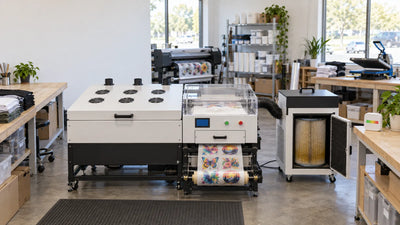
In a DTF production setting we monitored, a device displayed approximately 150 AQI while ovens were operating. When filters were not replaced within approximately two weeks, readings exceeded 200 AQI. Strong odors, throat irritation, and oily deposits in the extraction system were also observed.
These observations raise questions about exposure control. They are not an independently validated industrial hygiene study. We have not established the chemicals present, the accuracy of the instrument for this process, or the relationship between those readings and occupational exposure limits.
They also do not prove that every filter becomes unsafe after 15 days. Filter service life must be evaluated against the actual production load and the manufacturer's supported maintenance requirements.
What an AQI reading can and cannot show
On the U.S. AQI scale, 150 is the upper boundary of “Unhealthy for Sensitive Groups”; 201–300 is “Very Unhealthy.” Those categories communicate outdoor air quality. A workplace monitor's displayed number must be interpreted according to its sensors and calculation method. AirNow AQI definitions.
AQI is an index, not a concentration in micrograms per cubic meter. If a device derives AQI from particles alone, it cannot establish whether gases are adequately controlled. EPA explains that low-cost indoor monitors only detect the contaminants they are designed to measure and do not provide a complete picture of indoor air quality. EPA guidance on indoor monitors.
Consequently, a lower reading after filter replacement is useful screening information, but it does not certify a safe workplace. A single high reading also cannot establish a diagnosis, a specific legal violation, or an automatic shutdown threshold.
Why worker symptoms and filter performance matter
Throat irritation during production should prompt an exposure investigation. It should not be dismissed as something employees must get used to. Symptoms alone do not identify the contaminant or establish the cause of an illness.
Some polyurethane-related processes can involve isocyanates during thermal degradation. OSHA identifies asthma and respiratory irritation as potential effects of hazardous isocyanate exposure. Whether a particular DTF process produces these substances must be determined for its materials and conditions; their presence should not be assumed from odor or AQI. OSHA isocyanate information.
OSHA's industrial ventilation guidance recommends performance monitoring, maintenance, and backup or bypass exhaust arrangements where process air is recirculated. It also recommends preventing recirculation during malfunction. These recommendations help frame an engineering assessment; they are not a standalone ban on every filter-based installation. OSHA industrial ventilation guidance.
The OSHA duties a Texas employer must evaluate
The following requirements may apply to DTF production:
- Recognized serious hazards: Section 5(a)(1) of the OSH Act requires employers to address recognized hazards causing or likely to cause death or serious physical harm. Its application depends on the facts and applicable standards. General Duty Clause.
- Airborne exposure limits: 29 CFR 1910.1000 limits employee exposure to listed substances. Paragraph (e) requires feasible administrative or engineering controls to be determined and implemented first to achieve compliance. Air Contaminants standard.
- Control of contaminated air: 29 CFR 1910.134(a)(1) prioritizes preventing atmospheric contamination through feasible engineering controls. Where respirators are required, applicable program, selection, medical evaluation, training, and fit-testing requirements also apply. Respiratory Protection standard.
- Chemical information and training: Where the Hazard Communication Standard applies, employers need the required written program, labels, accessible safety data sheets, and employee training. 29 CFR 1910.1200.
There is no need to wait for a new rule bearing the DTF name. Existing standards can already apply to the hazards created by the process.
A practical investigation for an operating print shop
Our recommendation is to pause affected production when persistent irritation and worsening readings suggest that controls are failing, and obtain a qualified industrial hygiene assessment. The assessment should address:
- Materials and operating conditions. Record ink and powder products, safety data sheets, oven settings, production rate, filter age, and operating hours.
- Employee exposure. Select appropriate sampling for the relevant particles and chemicals, including breathing-zone measurements and task-related peaks where warranted.
- Control performance. Inspect source capture, airflow, seals, ducting, filter condition, room ventilation, and replacement air. Compare conditions without deliberately extending exposure to a failing system.
- Corrective action. Set maintenance and operating criteria based on the findings, then verify that the changes work under representative production conditions.
Properly designed outdoor exhaust is an option to evaluate where emissions are not adequately controlled. Its discharge location, replacement air, and applicable requirements also matter. Installing a duct alone does not demonstrate compliance.
When unsafe conditions can stop production
An inspection can lead to citations, required corrections, and penalties when violations are established. Failure to correct cited violations can result in additional penalties. OSH Act Section 17.
For imminent dangers, Section 13 allows the Secretary of Labor to seek relief from a federal district court. The legal threshold concerns danger reasonably expected to cause death or serious physical harm immediately, or before ordinary enforcement can eliminate it. An order can prohibit employee presence in affected locations, potentially stopping production there. OSH Act Section 13.
This is different from automatically closing an entire business because a monitor shows 200 AQI. A shop that has not been inspected should not interpret that absence as approval or assume enforcement will remain absent.
Employee compensation and Texas business exposure
Workers who develop qualifying work-related illnesses may have compensation rights. Medical evidence, work history, applicable deadlines, insurance arrangements, and the connection between employment and illness matter.
Texas does not require most private employers to carry workers' compensation, but not carrying it has important consequences. The Texas Department of Insurance explains that employers without coverage lose protection from most employee injury lawsuits and certain defenses. Employees may sue over workplace injuries or illnesses. Employers with coverage generally receive protection from most such lawsuits, subject to exceptions. Texas workers' compensation guide.
An elevated air reading alone does not prove entitlement to damages. It can nevertheless be a reason to investigate conditions before exposure continues.
For Dallas and other Texas print shops, protecting employees requires documented control of the actual process. Maintenance records and professional exposure assessment provide a stronger basis for decisions than a supplier's assurance that a filter makes the room safe.
Frequently Asked Questions
Is 150 AQI dangerous inside a DTF print shop?
On the U.S. AQI scale, 150 is the upper boundary of “Unhealthy for Sensitive Groups,” but those categories describe outdoor air. A workplace monitor's number has to be interpreted according to its sensors and calculation method, and a single high reading cannot establish a diagnosis, a specific legal violation, or an automatic shutdown threshold.
Does a lower AQI reading after a filter change mean the shop is safe?
No. A lower reading after filter replacement is useful screening information, but it does not certify a safe workplace. AQI is an index, not a concentration, and a device that derives AQI from particles alone cannot show whether gases are adequately controlled.
How often should DTF oven filters be replaced?
There is no universal interval. In the setting we monitored, readings exceeded 200 AQI when filters were not replaced within about two weeks, but that does not prove every filter becomes unsafe after 15 days. Filter service life must be evaluated against the actual production load and the manufacturer's supported maintenance requirements.
What should I do if employees get throat irritation during production?
Treat it as a reason to investigate exposure, not something employees must get used to. Symptoms alone do not identify the contaminant or the cause of an illness. When persistent irritation and worsening readings suggest controls are failing, our recommendation is to pause affected production and obtain a qualified industrial hygiene assessment.
Is installing an outdoor exhaust duct enough?
Properly designed outdoor exhaust is an option to evaluate where emissions are not adequately controlled. Its discharge location, replacement air, and applicable requirements also matter. Installing a duct alone does not demonstrate compliance.
Which OSHA requirements can apply to DTF oven fumes?
Depending on the facts, they can include the General Duty Clause (Section 5(a)(1) of the OSH Act), the Air Contaminants standard (29 CFR 1910.1000), the Respiratory Protection standard (29 CFR 1910.134), and the Hazard Communication Standard (29 CFR 1910.1200). There is no need to wait for a rule bearing the DTF name; existing standards can already apply.
Can OSHA shut down a DTF print shop?
An inspection can lead to citations, required corrections, and penalties when violations are established. For imminent dangers, Section 13 allows the Secretary of Labor to seek relief from a federal district court, and an order can prohibit employee presence in affected locations, potentially stopping production there. That is different from automatically closing a business because a monitor shows 200 AQI.
Do Texas employers have to carry workers' compensation?
Texas does not require most private employers to carry it, but not carrying it has important consequences. According to the Texas Department of Insurance, employers without coverage lose protection from most employee injury lawsuits and certain defenses, and employees may sue over workplace injuries or illnesses.
Comments 0
Be the first to leave a comment.