
Church Apparel Printing Guide: Shirts for Every Team | DTF Dallas
Sep 25, 2026 (Updated on Sep 29, 2026)
A church is never one shirt order. It is a volunteer team, a staff, a youth group, a kids ministry, a media team, greeters, a security team, and whatever the summer calendar adds on top. Most church apparel problems start when all of that gets treated as a single job.
This guide covers how to plan, print, and press apparel for a whole church: which teams need what, how to choose a blank for each one, how to get every design onto a single transfer sheet, and how to size a group order without ending up with a box of unworn smalls.
Teams to outfit
8+
in an average church
Artwork needed
1 logo
reused across all
Per-color setup
$0
DTF has none
Transfer sheets
1
for the whole order
What this guide covers
- Why church apparel orders go wrong
- The eight teams a church actually has to dress
- One logo across t-shirts, polos, hoodies and kids sizes
- Church shirt design ideas that survive a year of wear
- Choosing the right blank for each team
- Sizing a group order without dead stock
- Gang sheet math for a full church run
- Pressing, washing, and what the care card should say
- Fundraisers, anniversaries and one-off event shirts
- FAQ: church apparel printing answered
Quick answer: what is the easiest way to print shirts for a whole church?
Use one logo file, choose a different blank for each team, and put every version of the artwork on a single DTF gang sheet. DTF transfers bond to cotton, polyester and blends, so the same sheet can press a volunteer t-shirt, a staff polo, a youth hoodie and a kids tee. Because DTF has no per-color setup charge, a full-color logo costs the same as a one-color one, and small teams of five do not get penalized the way they would with screen printing.
Why Church Apparel Orders Go Wrong
Three failures repeat across almost every church order, and none of them are printing problems.
Everyone gets the same shirt. A single bulk tee is ordered for the whole congregation, and then the staff has nothing to wear that reads as staff, the security team is indistinguishable from guests, and the youth group refuses to wear it. The shirt was not wrong. Treating nine different groups as one group was.
The order waits for a minimum. Screen printing punishes small runs, so the media team of six waits until enough other teams need shirts to justify a print. Half the time the order never happens. DTF removes that pressure, because six transfers cost six transfers.
The logo gets redrawn every time. Someone recreates the church logo for each new shirt, and after three years there are four slightly different versions in circulation. Lock one master file, keep it as a transparent PNG at 300 DPI, and reuse it for everything.
The Eight Teams a Church Has to Dress
Start by listing the groups, not the garments. Each one has a different job, a different level of formality, and a different quantity.
Largest run
Volunteers and serve teams
The biggest quantity and the most visible group. Church volunteer shirts need to be recognizable from across a room, comfortable for a three-hour shift, and cheap enough to reprint when the roster changes.
Most formal
Staff and pastoral team
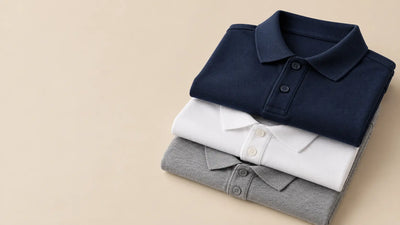
Church staff shirts usually mean a polo rather than a tee. A collar reads as staff without reading as uniform, and it holds up for people who are photographed every week.
Most opinionated
Youth group
Church youth group shirts are the only category where the design matters more than the logo. If students would not wear it outside church, it will not get worn inside church either.
Smallest sizes
Kids ministry
Kids church shirts need youth and toddler sizing and softer blanks. Print smaller than you think: a 10-inch chest graphic on a youth small is a bib.
Dark only
Media and production team
Church media team shirts are almost always black, because the team works beside a stage and should disappear on camera. Dark garments are exactly where DTF earns its keep with a white underbase.
Must be readable
Safety and security
Church security shirts exist to be identified fast. Back text matters more than a chest logo, and the wording should be agreed with leadership before anything is printed.
First impression
Greeters and ushers
The first shirt a visitor sees. Keep it warm rather than corporate, and keep the wording short enough to read from the door.
Seasonal
Camp, retreats and events
Church camp shirts, baptism shirts and anniversary shirts are dated by nature. They are printed once, worn hard, and never reordered, which makes them a perfect fit for a small transfer run.
Not every church has all eight. Most have more than they expect once the list is written down.
One Logo, Many Garments
The reason a church order is awkward is that the same artwork has to land on very different fabrics. A cotton tee, a polyester polo, a fleece hoodie and a soft youth tee do not behave the same under a heat press, and screen printing or vinyl usually means a separate setup for each.
A DTF transfer does not care. The adhesive bonds to the fibers rather than to one fabric type, so the same sheet of artwork presses onto all four. What changes is the press setting, not the print.
Lock the master artwork once
- Export the church logo as a transparent PNG at 300 DPI
- Make a full-color version and a single-color white version for dark garments
- Decide the printed width for each garment type and write it down
- Keep a back-print version with the wording spelled out for security and volunteers
- Store the file somewhere the whole team can reach, not on one person's laptop
If you are choosing garments for the first time, the breakdown in best and worst fabrics for DTF transfers covers how each fiber behaves.
Church Shirt Design Ideas That Survive a Year
Most church t-shirt design ideas fail for the same reason: they are dated, crowded, or written for the person who made them.
Logo only, worn small. A left-chest logo at 3 to 4 inches is the most reusable church shirt there is. It works for volunteers, greeters and staff, it survives a rebrand of everything except the logo, and it does not compete with whatever else the person is wearing.
Role on the back, logo on the front. This is the layout that actually solves the identification problem. The front stays the same for the whole church; only the back wording changes per team. One front design, eight back variants, all on the same sheet.
A verse, set plainly. Bible verses for church t-shirts work when the type is treated as design rather than decoration. One line, one weight, generous spacing. Long passages shrink to unreadable at chest size.
A year, not a date. For camp and anniversary shirts, printing the year rather than a full date keeps the shirt wearable for twelve months instead of one weekend.
Leave the trend alone. A design built on a current meme or font trend will look old before the shirts wear out. Churches reorder on a multi-year cycle, so the design has to age slower than the fabric.
Choosing the Blank for Each Team
The blank does more work than the print in how a shirt gets received.
-
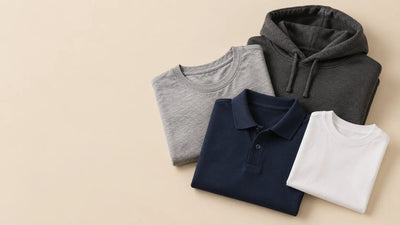
Volunteers: a mid-weight cotton or blend tee
Comfortable for long shifts, cheap enough to reprint, and available in the widest size range. Browse the blank t-shirt range and pick one color you can reorder for years.
-
Staff: a performance or pique polo
Church polo shirts read as staff without reading as a uniform. A polyester performance polo like the A4 Essential performance polo presses cleanly and holds its shape through weekly wear.
-
Youth: a heavier tee or a hoodie
Students wear what looks retail. A heavyweight tee or a piece from the blank sweatshirt and hoodie range gets worn outside the youth room, which is the whole point.
-
Kids: soft, light, and sized down
Youth and toddler sizing, a softer hand, and a print width of 6 to 8 inches rather than 10 to 12. Lighter garments also press cooler, which matters on thin kids blanks.
-
Media: black, every time
Black tees with a white or single-color print. The white ink underbase is what makes the design read on black, and it is built into the transfer rather than being an extra screen.
-
Security: high contrast, back print
A dark shirt with clear back wording is the most legible combination at a distance. Keep the type large and the wording short.
For a deeper comparison of blanks under a transfer, see best shirts for DTF transfers.
Sizing a Group Order
The most expensive mistake in church apparel is not the printing. It is the box of unworn shirts in the storage closet.
Collect sizes before you order, not after. A shared form with a deadline works better than a signup sheet on a table, and a size chart removes most of the guesswork. The Gildan size chart guide is a practical reference to send alongside the form.
Two habits that save money:
- Order blanks to the collected sizes, not to a bell curve. Church congregations skew larger than generic size curves assume.
- Order transfers with spares, not blanks with spares. A spare transfer costs very little. A spare blank in the wrong size costs the whole garment.
This split is the practical advantage of ready-to-press transfers: you can hold extra artwork without holding extra inventory, and press it when a new volunteer joins in March.
Gang Sheet Math for a Church Order
A church order is the textbook case for a gang sheet, because it is many small designs rather than one large run.
A typical sheet for a mid-sized church carries the front logo repeated for every garment, eight back variants for the different teams, a smaller version of the logo for kids sizes, a white-ink version for the media team's black shirts, and a handful of spares. That is one file, one order, one press session.
Because DTF has no per-color setup cost, a full-color church logo prices the same as a one-color one, and adding a ninth team to the sheet does not add a setup fee. You can build the layout yourself in the DTF gang sheet builder, or order individual transfers by size if a team only needs a few.
For layout strategy on a larger sheet, how to build the perfect DTF gang sheet covers nesting and spacing.
Pressing and Durability
Church shirts get worn weekly and washed hard, often by volunteers who will not read instructions. Durability comes from the press, not from the print.
Our universal setting is 305 °F for 15 seconds at medium-firm pressure with a cold peel, followed by a 5-second repress under parchment. That repress is where most of the wash durability comes from. Polyester polos sit lower, around 290 to 300 °F, to avoid glossing the fabric. The full fabric-by-fabric chart is in the ultimate DTF heat press temperature and time guide.
On longevity, we pressed a transfer and washed it one hundred times to see what actually happens: the 100-wash test results.
The care note to send with the shirts
- Turn the shirt inside out before washing
- Wash cold on a normal cycle
- Skip fabric softener, which leaves residue between the fibers and the film
- Tumble dry low or hang to dry
- Never iron directly on the print
The reasoning behind each line is in how to wash DTF transfers without damaging the print.
Fundraisers, Anniversaries and One-Off Events
Church fundraising apparel works on a different math than team shirts. You are not outfitting a roster, you are selling to a congregation, and you do not know the quantity until the orders come in.
The safe pattern is to sell first and press second. Collect orders and sizes, buy blanks to match, press the transfers you need, and keep the leftovers as transfers rather than as finished shirts. Nothing is wasted except a few sheets of film.
The same applies to church anniversary shirts and baptism shirts, where the quantity is tied to an event rather than a team. For pricing a run you intend to sell, the method in the t-shirt pricing formula works the same for a fundraiser as for a business.
Press one shirt before you press eighty. Run a single test on the exact blank you bought, wash it once, and check the edges. That one shirt tells you more about your press and your blanks than any settings chart can.
Ordering Church Apparel Transfers from DTF Dallas
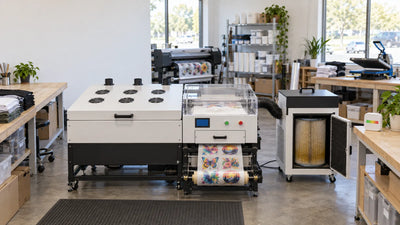
DTF Dallas prints the transfers, and our blank apparel range covers the tees, polos, hoodies and caps a church order usually needs, so you can source the garments and the prints in one place.
- Build a gang sheet if you are outfitting several teams at once
- Order transfers by size for a single team or a handful of replacements
- Browse ready-to-press transfers if the artwork is already finished
Frequently Asked Questions
What is the best way to print custom church shirts?
DTF transfers suit a church order better than screen printing or vinyl, because one sheet of artwork presses onto cotton tees, polyester polos, fleece hoodies and youth sizes alike. A church rarely orders a single garment type, and DTF removes the need for a separate setup per fabric or per color. The same artwork file can then be reused for every team in the building.
How should church staff shirts differ from volunteer shirts?
The clearest approach is to change the garment rather than the logo, putting staff in a polo and volunteers in a t-shirt. A collar reads as staff at a glance while keeping one consistent brand across the whole church. Both garments can be pressed from the same artwork on the same transfer sheet.
Can church shirts be printed on black garments?
Church shirts print on black and other dark garments because a DTF transfer carries its own white ink underbase beneath the color layers. That underbase is what keeps the logo colors accurate instead of letting the garment show through. Media and production teams, who almost always wear black, are usually the simplest part of a church order for this reason.
What are good church t-shirt design ideas?
A small left-chest logo is the most reusable church shirt design, because it survives a change of theme, season or leadership. For teams, keeping one shared front logo and changing only the back wording gives every group its own shirt from a single design. If a verse is used, one short line set plainly reads better at chest size than a full passage.
Does every ministry team need its own design?
Most churches need only one shared front design plus a different back wording for each team. The front logo stays identical across volunteers, staff, youth and media, which keeps the brand consistent and keeps the artwork count low. Only groups with a genuinely separate purpose, such as a summer camp or an anniversary, usually justify a fully independent design.
Can one gang sheet cover several ministry teams?
One gang sheet can carry the artwork for several ministry teams at once, including the shared front logo, a back design for each team, a scaled-down version for kids sizes and a white-ink version for dark garments. Grouping them onto a single sheet is what turns a multi-team church order into one job instead of a series of small separate ones. The layout can be built in the DTF Dallas gang sheet builder.
Outfit Every Team From One Sheet
No minimums · No per-color setup · Cotton, polyester and blends from the same artwork
Build your gang sheet →Church apparel is a planning problem before it is a printing problem. Write the list of teams, lock one logo file, pick a blank per team, and put the whole thing on one sheet. The printing is the easy part.
Comments 0
Be the first to leave a comment.