
Dark Shirt Printing Guide
Discharge Printing vs DTF
Which printing method creates the softest print on dark shirts? Compare softness, fabric compatibility, color, durability, setup, and production efficiency before choosing the best method for your next apparel project.

Quick Answer: Is Discharge Printing Softer Than DTF?
Discharge printing generally creates the softest result on compatible 100% cotton dark shirts. It changes the garment dye instead of placing a transfer layer over the fabric. DTF remains slightly more noticeable to the touch, especially in large solid designs, but offers much greater fabric versatility, full-color capability, and short-run efficiency.
If you have ever picked up a custom printed black T-shirt and wondered why the design felt thick or rubbery, you are not alone. Soft hand feel has become a major priority for apparel brands, clothing startups, print shops, Etsy and Shopify sellers, merchandise companies, and event organizers.
Customers want bold, vibrant graphics without a heavy print sitting on top of the shirt. For years, discharge printing has been associated with exceptionally soft prints on dark cotton garments. Modern DTF printing and how it works has changed the conversation by providing a more versatile way to decorate many garment types.
What Does Soft Hand Feel Mean?
Soft hand feel describes how noticeable a print feels when someone touches or wears the garment. A soft print feels flexible and natural rather than thick, stiff, or rubbery.
Printing MethodThe way color is applied or transferred affects how much material remains on the shirt.
Artwork CoverageLarge solid graphics usually feel heavier than open designs with negative space.
Garment FabricFabric weight, texture, coating, stretch, and dye can all change the final result.
Ink and AdhesiveInk density and adhesive coverage influence thickness and flexibility.
Heat ApplicationTemperature, time, pressure, peel method, and finishing steps must match the transfer system. DTF Dallas transfers press at 290 to 310°F.
Production QualityWell-calibrated production generally creates a cleaner and more consistent hand feel.
What Is Discharge Printing?
Discharge printing uses a specialized ink system to alter or remove part of the garment's original dye. Pigment may then be added to create the final printed color.
Because the process changes the fabric color rather than building a thick ink layer over it, discharge printing can create an exceptionally soft and breathable finish.
Advantages
- Exceptionally soft hand feel
- Breathable finish
- Vintage or premium appearance
- Excellent on compatible cotton garments
Limitations
- Most reliable on discharge-compatible 100% cotton
- Garment dyes may react differently
- Requires testing and chemical handling
- More setup for short or highly detailed orders
What Is DTF Printing?
DTF, or Direct to Film, prints an image onto a coated transfer film. A hot-melt adhesive is applied, cured, and then transferred to the garment with a heat press.
A white underbase helps DTF produce bright colors on black and other dark garments. It also handles full-color artwork, photographs, gradients, and fine details without creating separate screens for each color.
Advantages
- Works on cotton, polyester, and many blends
- Excellent full-color reproduction
- Efficient for small and medium orders
- No garment-dye discharge process required
Limitations
- Large solid prints feel more noticeable
- Quality depends on the full production system
- Nylon and coated fabrics require testing
- Incorrect pressing can affect feel and durability
Why Do Some DTF Prints Feel Thick?
Not every DTF transfer feels the same. The finished result depends on the transfer materials, artwork, garment, and application process.
Large Solid AreasA large rectangle of color covers more fabric and naturally feels heavier.
Heavy White UnderbaseMore white ink coverage may increase opacity, but it can also increase the noticeable print layer.
Adhesive CoverageThe adhesive must be sufficient for bonding without creating unnecessary buildup.
Incorrect PressureToo much or too little pressure may affect bonding, texture, and durability.
Wrong Application RecipeTime, temperature, peel, and finishing press should follow the supplier's directions. DTF Dallas specifies 290 to 310°F.
Garment SurfaceA lightweight tee, heavyweight shirt, polyester jersey, and fleece hoodie will not feel identical.
How Can You Make a DTF Print Feel Softer?
Artwork preparation often matters as much as the printing method itself. A design with large uninterrupted blocks will feel heavier than artwork created with intentional open space.
- Use negative space and knockout areas where possible.
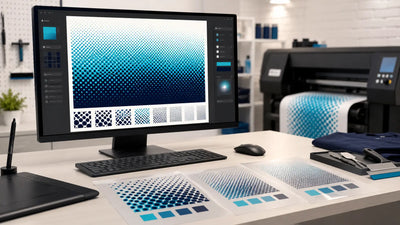
- Use halftones to create visual shading with less solid coverage.
- Avoid unnecessary background rectangles.
- Break very large artwork into lighter visual elements.
- Follow the transfer supplier's exact press instructions.
- Test the design on the final garment before a large production run.
For the next step, review how to build an efficient DTF gang sheet, then use the DTF Dallas Gang Sheet Builder to arrange your artwork.
Discharge Printing vs DTF Comparison
| Feature | Discharge Printing | DTF Printing |
|---|---|---|
| Soft hand feel | Usually the softest | Soft to moderately noticeable, depending on coverage |
| Dark garments | Excellent on compatible dyes | Excellent |
| 100% cotton | Excellent when discharge-compatible | Excellent |
| Polyester | Generally unsuitable | Excellent with the correct application system |
| Cotton blends | Limited or unpredictable | Excellent |
| Nylon and coated fabrics | Generally unsuitable | Possible with compatible transfers and testing |
| Full-color artwork | Possible but production-intensive | Excellent |
| Gradients and photographs | More complex | Excellent |
| Small orders | Usually less economical | Cost-effective |
| Setup | Screens, ink mixing, testing, and curing | Digital file setup and heat application |
| Breathability | Excellent | Depends on print area and artwork openness |
| Durability | Excellent when properly cured | Excellent when properly applied and cared for |
| Fabric versatility | Limited | Very high |
Which Printing Method Should You Choose?
Choose Discharge Printing If
- You are printing on compatible 100% cotton garments.
- The softest possible hand feel is the main priority.
- Your artwork works well with a screen-printing workflow.
- You are producing a larger repeat order.
- You have access to experienced discharge printing production.
Choose DTF Printing If
- You need to decorate several garment types.
- You need vivid full-color graphics or gradients.
- You are producing a small or medium order and want to order DTF transfers by size.
- You need a faster digital production workflow.
- You want one practical solution for many apparel projects.
A Realistic Perspective
On a compatible premium 100% cotton garment, discharge printing usually delivers the softest hand feel. It becomes part of the fabric rather than forming a transfer layer over it.
DTF will generally remain more noticeable to the touch, particularly when a design contains large solid areas. However, well-produced DTF artwork with negative space, halftones, smaller print areas, and carefully controlled application settings can feel much lighter than a dense, low-quality transfer.
For businesses handling several fabrics, short runs, detailed artwork, and fast production schedules, DTF often provides the best overall balance of appearance, versatility, efficiency, and value.
Why DTF Dallas Recommends DTF for Most Projects
At DTF Dallas, we work with different garment constructions, artwork styles, transfer sizes, and application settings in day-to-day production. This experience shows that DTF is a practical solution for many businesses because it offers:
- Consistent full-color results on many common apparel fabrics
- Same-day production for qualifying orders placed by the 2:00 PM CST cutoff
- 24/7 self-service pickup at 801 Alpha Dr, Suite 112, Richardson, TX 75081
- Cost-effective gang sheet ordering with no minimums and free shipping on orders over $100
- Strong color on black and other dark garments
- Artwork options that can reduce unnecessary solid coverage
We also believe in setting realistic expectations. For a project limited to discharge-compatible 100% cotton where the absolute softest print is the only priority, discharge printing may still be worth considering. For most other apparel applications, DTF provides a more flexible production solution. Review the DTF Dallas 100 wash test for a separate look at wash performance.
Who Reviewed This DTF Printing Guide?
This comparison was prepared by the DTF Dallas content team and reviewed for production accuracy by the DTF Dallas production team. The recommendations reflect day-to-day work with different transfer sizes, garment constructions, artwork coverage levels, and heat-press applications.
Questions about a specific fabric or design can be sent through the DTF Dallas contact page.
DTF Dallas: 801 Alpha Dr, Suite 112, Richardson, TX 75081 / (469) 769-8949 / info@dtfdallas.com
Frequently Asked Questions
Can DTF feel as soft as discharge printing?
On compatible 100% cotton dark shirts, discharge printing creates the softer result, though premium DTF still feels soft and flexible. DTF Dallas transfers feel lighter when artwork uses negative space, halftones, and limited solid coverage. Large solid graphics stay more noticeable to the touch. Review your artwork in the DTF Dallas Gang Sheet Builder before you order.
Does DTF work on black shirts?
Yes, DTF works on black shirts because a white ink underbase supports the printed colors over the dark fabric. DTF Dallas transfers can reproduce full-color artwork, gradients, text, and fine details on black cotton, polyester, and many blended garments. Order a test design through DTF Transfers by Size.
Why does a DTF print feel thick?
A DTF print feels thick when the artwork covers a large solid area or the transfer carries more ink and adhesive than the design requires. Garment texture, pressure, temperature, press time, peel method, and finishing steps also change DTF hand feel. DTF Dallas applies transfers at 290 to 310°F and recommends reducing solid coverage, then testing on the final garment. Build a lighter layout in the DTF Dallas Gang Sheet Builder.
How can I make a DTF print feel softer?
You can make a DTF print feel softer by reducing solid coverage and using negative space, knockout areas, or halftones where the artwork allows. DTF Dallas recommends following the transfer application instructions for time, temperature, pressure, peel, and finishing. Build a lighter layout in the DTF Dallas Gang Sheet Builder.
Does discharge printing work on polyester?
Discharge printing is not the right method for polyester because the process depends on compatible garment dyes, most commonly on 100% cotton. Polyester and cotton-polyester blends discharge unevenly or fail to produce the intended color. For polyester projects, DTF Dallas recommends a compatible DTF transfer tested on the final garment before a full run. Start with DTF Transfers by Size.
Which printing method is better for small orders?
DTF is more cost-effective than discharge printing for small orders because it requires no separate screen setup for every color. DTF Dallas accepts orders with no minimums, ships free on orders over $100, and offers individual transfers or gang sheet layouts. Choose DTF Transfers by Size or build a custom gang sheet.
Is DTF breathable on large shirt designs?
Large solid DTF designs are less breathable than small or open designs because they cover more of the garment surface. DTF Dallas recommends negative space, separated artwork elements, or halftones when softness and airflow are priorities. Compare artwork coverage on a test shirt before approving a large run, then arrange the final layout in the DTF Dallas Gang Sheet Builder.
Which lasts longer, discharge printing or DTF?
Both discharge printing and DTF can provide strong wash durability when each method is produced, applied, and cared for correctly. The final result depends on the garment, ink or transfer system, curing or pressing, and laundry conditions. Review the DTF Dallas 100 wash test for DTF-specific test results.
Ready to Start?
Print Your Next Dark Shirt Project with DTF Dallas
Upload your artwork, build a gang sheet, or contact our team for help choosing the right transfer approach for your fabric, artwork, and production goals.
Customer pickup and same-day shipping are available. Same-day production eligibility depends on the order type and the 2:00 PM CST cutoff.