
What Does DTF Mean in Screen Printing? | DTF Dallas
Aug 3, 2026 (Updated on Sep 30, 2026)
"Is DTF the same as screen printing?" comes up whenever a business owner who has been buying screen-printed shirts for years hears someone mention DTF for the first time.
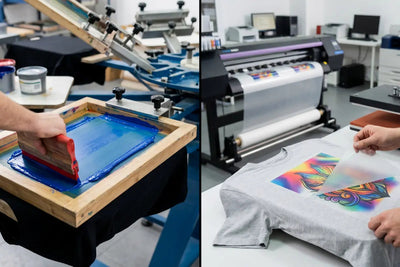
The short answer is no, they are different processes. But understanding why clarifies what each method actually does and where each one fits in your production workflow. DTF stands for Direct to Film. Screen printing uses mesh screens, ink, and a squeegee. Both put color on fabric, but the path they take to get there is almost completely different.
DTF · Direct to Film
Digital, no screens
Prints full-color artwork onto PET film with CMYK plus white ink, applies adhesive powder, cures, and bonds to fabric with heat. Closer to digital inkjet than to screen printing.
SP · Screen Printing
Analog, one screen per color
Pushes ink through a mesh screen with a squeegee. Each color needs its own screen and setup. Durable and cost-efficient on large single-design runs.
Jump to any section
- Where screen printing came from
- What DTF brought to the market
- How the two compare directly
- Does DTF replace screen printing?
- When each method wins
- What DTF Dallas offers vs a screen printer
- FAQ: DTF vs screen printing answered
Quick answer: what does DTF mean in screen printing?
DTF means Direct to Film, a digital transfer method, and it is not screen printing. Screen printing pushes ink through a separate mesh screen for each color, while DTF prints full-color artwork with CMYK plus white ink onto a film that bonds to fabric with heat. DTF has no per-color setup and no minimum; screen printing wins on per-unit cost at high volume. DTF Dallas runs direct-to-film production, not screen printing, with same-day turnaround on qualifying orders.
Where Screen Printing Came From
Screen printing is one of the oldest decoration methods in commercial apparel. The basics go back centuries, but the modern version standardized around the mid-20th century as the garment decoration industry scaled up.
The process: a mesh screen is stretched over a frame. Photo emulsion is applied to the mesh and exposed through a film positive, hardening everywhere except where the design is. Ink is pushed through the open mesh areas with a squeegee, transferring the design to the fabric below. Each color in the design requires a separate screen.
Screen printing dominated custom apparel for decades because it produced durable, vibrant results at low per-unit cost on large runs. For 500 shirts with a two-color logo, it is hard to beat on price. The limitations are setup fees per color, minimum order requirements, and difficulty with full-color photographic artwork at reasonable cost.
What DTF Brought to the Market
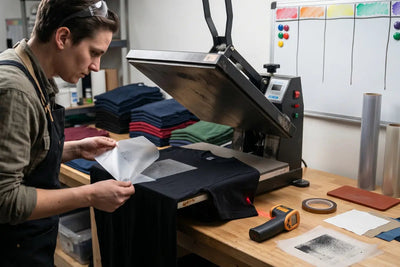
DTF printing emerged in the early 2010s and gained significant commercial adoption by the late 2010s. The process prints full-color artwork onto a PET film using inkjet-style CMYK plus white ink technology, applies an adhesive powder, cures the film, and produces a transfer that bonds to fabric through heat and pressure.
From a technical standpoint, DTF is closer to digital inkjet printing than to screen printing. There are no screens, no per-color setup, and no physical separation of design layers required. Full-color photographic artwork prints in the same pass as simple two-color text. What DTF brought to the market that screen printing could not offer at practical price points:
- No minimum orders. One transfer costs the same per unit as a thousand.
- No per-color setup fees. A 40-color photo prints as easily as a two-color logo.
- Full color with gradients and photography on any fabric color.
- Substrate range across cotton, polyester, fleece, nylon, denim, leather, and most other fabrics.
How DTF and Screen Printing Compare Directly
| Factor | DTF | Screen Printing |
|---|---|---|
| Color cost | No per-color fee. A 4-color and a 40-color design cost the same per square inch. | Setup fee per screen, typically $20 to $50 per color. Four colors cost four setups. |
| Minimums | No minimum. One transfer or a thousand, same process. | Typically 12 to 48 pieces to justify screen setup. |
| Dark fabric | White ink underbase printed exactly to the design, vibrant on dark garments. | Spot colors with no underbase limitation. |
| Durability | 50-plus home wash cycles with under 5% color fade from DTF Dallas. | Plastisol on cotton can last the life of the garment. |
| Stretch | Holds bond on tri-blends and athletic fabrics that flex. | Rigid plastisol can crack over time on stretch fabric. |
| Cost at volume | More cost-efficient below about 36 to 48 pieces. | Per-unit cost often wins at high volume as setup spreads out. |
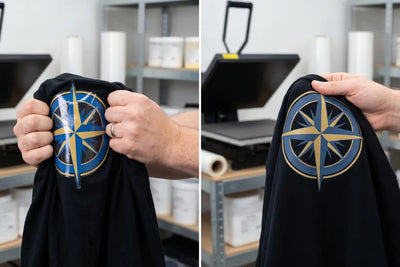
On light fabrics, both methods produce clean results. On dark fabrics, the DTF white ink layer produces results that are hard to distinguish from screen printing quality at significantly lower setup complexity.
Does DTF Replace Screen Printing?
For some use cases, yes. For others, no. The two methods are not always competing for the same order. They often fill different needs.
Screen printing makes sense when
- You are ordering 100 or more pieces of the same design.
- Your design has three or fewer solid colors.
- You are printing on cotton or cotton-blend where plastisol performs well.
- You have lead time for screen setup and a finalized design that will not change.
DTF makes sense when
- You are ordering fewer than 48 pieces.
- Your design is full color, photographic, or has gradients.
- You are printing on multiple fabric types in the same order.
- You need same-day or next-day turnaround, or have fine detail and small text.
Many businesses that grew up on screen printing now split their orders: screen printing for large single-design runs, DTF for small runs, multi-design orders, and time-sensitive jobs. In those cases the two methods are not competing for the same order; they are filling different needs.
What DTF Dallas Offers vs a Traditional Screen Printer
DTF Dallas specializes in direct-to-film production, not screen printing. The shop runs 80,000 inches of DTF production per day with same-day turnaround on qualifying orders.
80,000
inches of DTF produced per day
0
minimum order and per-color fees
100+
wash cycles, under 5% fade
What that means for your business: no minimum orders, no per-color fees, full-color capability, substrate flexibility, and same-day production when you need it. For custom DTF transfers across the DFW market, DTF Dallas serves businesses from a single transfer to high-volume production runs.
For a deeper look at how the two methods compare on cost and quality for specific use cases, the guide to DTF vs screen printing for your business covers the cost breakdown in detail. For how DTF stacks up against screen printing and sublimation together, the three-method comparison lays out the numbers across all three.
The custom t-shirt collection at DTF Dallas handles both transfer-only orders and finished custom apparel orders for businesses across the DFW area. Orders with print-ready files before 2:00 PM CST ship or are available for same-day pickup in Richardson.
Different tool, different job. DTF Dallas runs direct-to-film production with no minimums, no per-color fees, and same-day turnaround on qualifying orders before 2:00 PM CST, so small runs, multi-design orders, and rush jobs get the method built for them.
Frequently Asked Questions
Is DTF the same as screen printing?
No. DTF, or Direct to Film, is a digital transfer method that prints full-color artwork with CMYK plus white ink onto a film that bonds to fabric with heat. Screen printing pushes ink through a separate mesh screen for each color. DTF has no per-color setup or minimum, while screen printing wins on per-unit cost at high volume. DTF Dallas runs direct-to-film production, available in the DTF transfer collection.
Which is cheaper, DTF or screen printing?
It depends on volume. Below about 36 to 48 pieces, DTF is typically cheaper because screen printing charges $20 to $50 per color in setup fees, while DTF has none. Above that, screen printing's per-unit cost often wins as setup spreads across more pieces. For full-color or photographic designs at any volume, DTF avoids multi-screen costs entirely. Compare pricing on your design in the DTF Dallas DTF transfer collection.
Is DTF as durable as screen printing?
For most real-world use, yes. DTF Dallas transfers hold up for 50 or more home wash cycles with under 5% color fade, consistent with professional-grade screen printing durability. DTF also handles stretch better than rigid plastisol on tri-blends and athletic fabrics, where plastisol can crack over time. Well-executed plastisol on cotton can still last the life of the garment. Order tested transfers from the DTF transfer collection.
When should I use DTF instead of screen printing?
Use DTF when you are ordering fewer than 48 pieces, your design is full color or photographic, you are printing on multiple fabric types in one order, or you need same-day turnaround. Use screen printing for 100-plus pieces of one design with three or fewer solid colors on cotton. Many businesses split orders between both. DTF Dallas produces direct-to-film with no minimum, available in the DTF transfer collection.
Does DTF work on dark shirts like screen printing?
Yes. DTF uses a white ink underbase printed exactly to the design boundary, which creates a vibrant base for colors on dark garments. On dark fabric, DTF results are hard to distinguish from screen printing quality, at significantly lower setup complexity since there are no separate screens per color. DTF Dallas calibrates white ink density for dark garment orders. Order dark-ready transfers from the DTF transfer collection.
Does DTF Dallas do screen printing?
No. DTF Dallas specializes in direct-to-film production, not screen printing, running 80,000 inches of DTF per day with same-day turnaround on qualifying orders. This means no minimums, no per-color fees, full-color capability and substrate flexibility. DTF Dallas serves the DFW market from a single transfer to high-volume runs. Browse the custom t-shirt collection for transfer-only or finished apparel orders.
Get the Method Built for Your Order
No minimums · No per-color fees · Same-day production before 2 PM CST
Order DTF transfers →DTF and screen printing share a market but not a process. Screen printing pushes ink through a screen per color and wins on cost at high volume with simple designs. DTF prints full color onto film with no screens, no minimums, and no per-color fees, winning on small runs, multi-color art, mixed substrates, and fast turnaround. The right method depends on the order in front of you, and many businesses use both. For direct-to-film work, DTF Dallas covers the DFW market from one transfer to full production.
Comments 0
Be the first to leave a comment.