
DTF on Denim & Jeans: Pre-Wash, Press & Care | DTF Dallas
Jul 30, 2026 (Updated on Sep 30, 2026)
Denim is everywhere in custom apparel. Denim jackets, jeans, denim shirts and denim tote bags are all candidates for DTF decoration, and the fabric holds transfers well when the process accounts for its characteristics.
The three-step framework for denim is simple: pre-wash the garment, press with the right settings, and give the customer clear care instructions so the transfer survives long-term.
STEP 01
Pre-Wash
Pre-shrink the denim and remove factory sizing before pressing.
STEP 02
Press
305 to 320°F for 15 to 18 seconds, medium-firm pressure.
STEP 03
Care
Inside-out cold wash, no dry clean, no direct iron.
Jump to any section
- Why denim is a manageable substrate
- Step 1: pre-wash
- Step 2: press settings for denim
- Denim jacket vs denim jeans
- The indigo dye question
- What peel works on denim
- Step 3: care instructions
- Dark denim and transfer visibility
- Ordering DTF transfers for denim
- FAQ: DTF on denim answered
Quick answer: does DTF work on denim and jeans?
DTF works well on denim because denim is a cotton or cotton-blend twill, the same fabric family DTF handles reliably. Pre-wash the garment to pre-shrink it, press at 305 to 320°F for 15 to 18 seconds with medium-firm pressure, then wash inside-out in cold water for long-term durability. DTF on heavy denim regularly survives 50 or more wash cycles. DTF Dallas produces transfers for denim and heavy cotton with same-day production on print-ready files before 2:00 PM CST.
Why Denim Is a Manageable Substrate
Denim is a cotton or cotton-blend twill weave fabric, which puts it in the same family as other cotton substrates that DTF handles reliably. Unlike heat-sensitive synthetics where temperature management is the primary challenge, the main issues with denim are thickness, texture and pre-wash shrinkage.
- Thickness: Denim is significantly heavier than a standard t-shirt. A 12-ounce denim jacket fabric absorbs and dissipates heat more slowly than a 5-ounce jersey shirt, which affects how heat conducts through to the surface during pressing.
- Texture: Denim's twill weave creates a slightly raised, diagonal ribbed texture. This creates minor bridging at the transfer contact surface. For most designs it is imperceptible, but for very fine lines or small text the texture may create slight edge variation.
- Pre-wash shrinkage: Raw denim shrinks significantly in its first few washes. If a transfer is applied to unwashed denim and the garment then shrinks, the fabric contraction puts stress on the transfer edges. This is the most common cause of edge lifting on denim.
Step 1: Pre-Wash
Pre-wash denim garments before applying any DTF transfer. This step removes factory sizing, pre-shrinks the fabric, and creates a cleaner surface for adhesive bonding.
Raw or unwashed denim
New jeans and new denim jackets:
- Machine wash in warm water
- Standard detergent, normal cycle
- Machine dry on medium heat
Pre-washed or distressed denim
Already through the shrinkage cycle:
- A single wash before pressing still removes softeners or post-distressing treatments
- Air dry or machine dry as usual for that garment
After washing, press the denim with a hot iron or heat press (no transfer) to remove wrinkles before applying the DTF transfer. A wrinkled press surface creates uneven contact and produces uneven adhesion.
Step 2: Press Settings for Denim
Denim is primarily cotton, so press settings are close to standard cotton settings with adjustments for the thickness.
Temperature305 to 320°F
Time15 to 18 seconds (17 to 18s on 12oz+)
PressureMedium-firm
PeelHot (warm peel OK on thick denim)
The extended press time accounts for the heat mass of heavy denim. A 15-second press on a thick denim jacket may not conduct enough heat through to fully activate the adhesive, so increase to 17 or 18 seconds on heavyweight denim of 12 ounces and above.
Test before production. Denim varies considerably. A lightweight chambray denim shirt behaves very differently from a structured 14-ounce selvedge denim jacket. On any unfamiliar denim weight, press a test piece and verify adhesion before committing to a production run.
Denim Jacket vs Denim Jeans
Denim jackets
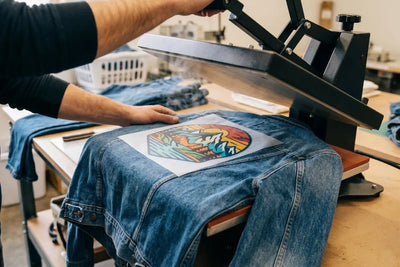
The most common DTF-on-denim application. The back panel is the primary placement, typically centered across the upper or lower back, and the chest area suits smaller logos or patches.
The back panel is one of the largest canvas areas in custom apparel. Full-back DTF designs span 12 to 14 inches wide and 8 to 10 inches tall depending on jacket size.
Denim jeans
Less common but completely workable. Common placements:
- Left or right thigh (front face)
- Back pocket area (pressed flat)
- Waistband adjacent (lower back)
The cylindrical leg requires pressing in sections. Insert a flat pressing surface inside the leg, press the front, rotate, then press the back separately.
Pocket flaps: Do not press transfers directly over functional pocket openings or pocket seam ridges. The uneven surface at seams creates adhesion gaps. Either design around seam locations or press sections of the design in separate passes.
The Indigo Dye Question
Traditional denim uses indigo dye, which is not a reactive or dischargeable dye at typical DTF press temperatures. Unlike polyester dyes that can migrate into DTF adhesive under heat, indigo does not migrate in the way that causes dye sublimation problems on synthetic fabrics.
However, pre-washing denim removes loose surface indigo that can transfer to the DTF transfer film during pressing. Unwashed raw indigo denim can leave faint blue surface traces on the adhesive layer, particularly around the transfer edges. The pre-wash step above prevents this. For over-dyed or fashion-washed denim with non-indigo dyes (red, yellow, or brightly colored denim), test for dye migration as you would with any cotton fabric using non-standard dyes.
What Peel Works on Denim
Hot peel on denim, the same as standard cotton applications. Denim retains heat well after pressing, so the transfer stays warm for a comfortable peel window. Peel promptly after the press opens, at a sharp angle.
For extra assurance on thick denim, a warm peel (waiting 10 to 15 seconds after pressing before peeling) is an acceptable alternative. The thicker fabric sustains transfer temperature long enough that a warm peel does not sacrifice much adhesive set compared to an immediate hot peel. For the full peel technique breakdown, including the sharp-angle method and when to switch from hot to cold peel on different substrates, the guide to hot peel vs cold peel DTF covers the decision at each step of the press cycle.
Finishing Press on Denim
After peeling, a finishing press improves adhesion on denim. Place a silicone sheet or parchment over the applied transfer and press at the same temperature for 5 to 8 seconds. The finishing press reactivates the adhesive surface and seats the transfer more firmly against the denim texture.
This step is optional on thin cotton garments but recommended on heavyweight denim, where initial transfer contact may be slightly less uniform due to fabric texture.
Step 3: Care Instructions That Make Transfers Survive
DTF transfers on denim outlast many decoration methods when customers wash correctly. Denim is often washed inside-out already to preserve color, which also protects DTF transfers, but clear care instructions reinforce the right habits.
Denim care guidelines to give customers
- Wash inside-out in cold or warm water, up to 105°F.
- Machine wash on a normal or gentle cycle.
- Tumble dry on medium heat, never high heat.
- Hang dry as a best practice for denim longevity.
What to avoid
- Do not dry clean. Solvents damage DTF adhesive.
- Do not iron directly over the transfer area.
- Do not tumble dry on high heat.
Denim decorated with DTF transfers regularly sees 50 or more wash cycles with proper care before any meaningful degradation. The thick cotton substrate gives the adhesive excellent mechanical grip, and properly cured transfers on heavy cotton are among the most durable DTF applications.
Dark Denim and Transfer Visibility
DTF transfers include a white underbase ink layer that makes colors pop on dark backgrounds, including dark denim. The white layer ensures that a yellow graphic on a dark indigo jacket appears vibrant rather than muted.
For black or very dark denim, the white underbase is especially important. Verify that your transfer file includes the white layer for any design with colors that require it against dark backgrounds. A DTF supplier producing your transfer handles the white layer automatically for dark-substrate orders when the file is prepared correctly. For darker fabrics generally, the guide to DTF on black shirts and how the white underbase makes colors pop explains the underbase layer and how it works across dark substrates beyond just black shirts.
Ordering DTF Transfers for Denim
Denim jackets and jeans are excellent candidates for DTF decoration: large print areas, forgiving press settings and excellent adhesion durability on the thick cotton substrate. For large-format back panel designs, transfers sized to the full back panel produce the best visual impact.
DTF Dallas produces custom DTF transfers for all fabric types, including denim and heavy cotton garments, with same-day production on print-ready files submitted before 2:00 PM CST. For large-format designs or gang sheet layouts across multiple denim pieces, the gang sheet builder lets you configure your layout before ordering.
Built to survive the wash. DTF Dallas transfers on heavy denim regularly last 50 or more wash cycles, ship same-day on print-ready files before 2:00 PM CST, and carry no order minimum, so you can test a single denim piece before a production run.
Frequently Asked Questions
Do DTF transfers work on denim jackets and jeans?
Yes. DTF transfers work well on denim because denim is a cotton or cotton-blend twill, the same fabric family DTF bonds to reliably. Pre-wash the garment first, press at 305 to 320°F for 15 to 18 seconds, and the transfer holds through 50 or more wash cycles. Denim jackets offer one of the largest print areas in custom apparel. DTF Dallas produces denim-ready transfers, available in the DTF transfer collection.
Do I need to wash denim before applying a DTF transfer?
Yes. Pre-wash denim before pressing to remove factory sizing and pre-shrink the fabric, because raw denim shrinks in its first washes and that contraction stresses the transfer edges, the most common cause of edge lifting. Machine wash raw denim in warm water and dry on medium heat, then press out wrinkles before applying the transfer. DTF Dallas prints denim-ready transfers with a transparent-background file. Order yours to start.
What temperature do I press DTF on denim?
Press denim at 305 to 320°F for 15 to 18 seconds with medium-firm pressure, increasing to 17 or 18 seconds on heavyweight denim of 12 ounces and above. The longer time accounts for the heat mass of thick denim, which conducts heat more slowly than a thin t-shirt. Test any unfamiliar denim weight before a production run. DTF Dallas transfers survive 50 or more washes on denim. Order a test transfer first.
Does indigo dye affect DTF transfers on denim?
Indigo dye does not migrate into DTF adhesive under heat the way polyester dyes do, so it does not cause the dye sublimation problems seen on synthetics. The one issue is loose surface indigo on raw denim, which can leave faint blue traces on the transfer film during pressing. Pre-washing removes it. For non-indigo colored denim, test for dye migration first. DTF Dallas produces transfers for all cotton substrates including denim, available in the DTF transfer collection.
How do I wash denim with a DTF transfer?
Wash denim with a DTF transfer inside-out in cold or warm water up to 105°F, on a normal or gentle cycle, and tumble dry on medium heat rather than high. Do not dry clean, since solvents damage the adhesive, and do not iron directly over the transfer. With this care, DTF on denim regularly lasts 50 or more wash cycles. DTF Dallas transfers are among the most durable DTF applications on heavy cotton, available in the DTF transfer collection.
How big can a DTF design be on a denim jacket back?
A full-back DTF design on a denim jacket spans 12 to 14 inches wide and 8 to 10 inches tall depending on jacket size, one of the largest print areas in custom apparel. For the best visual impact, size the transfer to the full back panel. DTF Dallas prints large-format transfers and gang sheets for multi-piece denim runs. Configure a large layout in the gang sheet builder before ordering.
Print DTF Transfers Built for Denim
Durable on heavy cotton · Same-day production before 2 PM CST · No minimums
Order DTF transfers →DTF on denim comes down to three steps: pre-wash to pre-shrink the fabric, press at 305 to 320°F for 15 to 18 seconds with medium-firm pressure, and send the customer home with clear inside-out cold-wash care instructions. Denim jackets and jeans reward the extra attention with large print areas and some of the most durable DTF applications you can produce, regularly surviving 50 or more wash cycles on heavy cotton.
Comments 0
Be the first to leave a comment.