
DTF vs Screen Printing vs DTG vs Sublimation: Which Wins?
Oct 17, 2026
Compare21 min read14 chapters
If you are trying to decide how to decorate custom apparel, the DTF vs screen printing question is probably the first one on your mind, and it is quickly followed by two more: DTF vs DTG, and DTF vs sublimation. These four methods dominate custom t-shirt printing today, and each one has a distinct personality. Direct-to-film (DTF) is the newest and the most flexible, screen printing is the proven workhorse for big runs, direct-to-garment (DTG) is the soft-hand digital option for cotton, and sublimation is the king of polyester. The honest answer to "which is best" is that it depends on your garment, your order size, your design, and how fast you need it. This guide breaks down all four side by side so you can choose with confidence instead of guessing.
We serve a lot of makers, small brands, schools, teams, and businesses here in Dallas, and the comparison that comes up more than any other is DTF vs screen printing, closely trailed by DTF vs DTG. So we are going to lead with those two matchups, give sublimation its fair treatment, and then lay everything out in two comparison tables plus a use-case cheat sheet. Along the way we keep the comparisons fair. Every method on this list is excellent at something. The goal is not to crown one universal winner, it is to help you match the right method to the right job.

01
Key Takeaways: DTF vs Screen Printing vs DTG vs Sublimation
- DTF vs screen printing in one line: DTF wins for small batches, full-color and photographic art, dark and mixed fabrics, and fast turnaround with no minimums. Screen printing wins for large single-color or few-color runs where the cost per shirt keeps dropping as the quantity climbs.
- DTF vs DTG in one line: DTG prints directly into cotton for the softest possible hand and a built-in look, while DTF prints onto a film transfer that bonds to almost any fabric, including blends and polyester, and typically holds up very well through repeated washing.
- DTF vs sublimation in one line: Sublimation gives a zero-texture, dye-in-the-fiber finish but only on polyester or poly-coated items in white or light colors. DTF works on cotton, blends, polyester, light or dark, which makes it far more versatile.
- Cost behaves differently by volume: DTF has a relatively flat cost curve, so one piece costs close to the same per unit as many. Screen printing carries upfront setup per color but gets more economical per piece as the run grows large.
- Color and detail: DTF, DTG, and sublimation all reproduce unlimited colors, gradients, and photographic detail. Screen printing is bold and punchy but gets more complex and costly as you add colors.
- Fabric and garment color: DTF is the most fabric-agnostic, performs strongly on dark garments thanks to its white underbase, and needs no special blanks.
- The practical rule: Small run, many colors, dark or mixed fabrics, quick deadline, you want DTF. Hundreds or thousands of the same simple design on cotton, screen printing. Soft cotton tees with photographic art, DTG. White or light polyester and hard goods, sublimation.
02
The Four Printing Methods at a Glance
Before we get into the head-to-head matchups, it helps to understand what each method actually is, because the names describe the process. Screen printing pushes ink through a stencil. Direct-to-garment prints ink straight into the fabric like an inkjet printer. Sublimation turns solid dye into gas that bonds inside polyester fibers. And direct-to-film prints your design onto a special film, coats it with adhesive powder, and heat presses it onto the garment. Those mechanical differences drive every practical difference you care about: cost, color range, feel, durability, fabric compatibility, and turnaround.
Here is the big-picture framing. Screen printing is an analog, physical process that rewards volume and simplicity. DTG and sublimation are digital processes with specific fabric requirements, DTG loving cotton and sublimation requiring polyester. DTF is the digital newcomer that was designed to remove the fabric restriction entirely. It prints full color digitally like DTG, bonds to nearly anything like a heat transfer, and keeps the per-piece cost steady whether you order a handful or a few hundred. That combination is exactly why DTF has grown so fast and why so many people are now searching DTF vs screen printing and DTF vs DTG before they place an order.
None of this makes the older methods obsolete. Screen printing still produces the most cost-efficient bulk runs in the industry and a signature ink finish that many brands love. DTG still delivers the softest, most "part of the shirt" result on premium cotton. Sublimation still gives all-over, edge-to-edge prints and a texture-free finish that nothing else matches on polyester. The trick is knowing when each one shines. Let's define them properly, then compare.
Analog versus digital, and why it matters
One useful way to group these four methods is analog versus digital. Screen printing is the analog method: it relies on physical screens, squeegees, and spot colors mixed by hand, and it rewards repetition because the hard part happens once during setup. DTF, DTG, and sublimation are digital methods: your artwork goes from a file to the printer with no color separations, which is why complexity costs nothing and small runs carry no setup penalty. Understanding this split clears up a lot of confusion. It explains why screen printing is cheapest at high volume but awkward for one-offs, and why the digital methods are effortless for short, colorful, variable work but do not get dramatically cheaper as the order grows. When you know which camp a method belongs to, its strengths and weaknesses stop being surprising.
The other key distinction is surface versus in-fiber. DTF and screen printing sit on top of the fabric as a bonded layer, which is what lets them cover dark garments with a white underbase. DTG and sublimation put color into the fabric, DTG by soaking ink into cotton fibers and sublimation by dyeing polyester fibers, which is what gives them their soft or texture-free hand but also ties them to specific fabrics. Almost every practical difference in this guide traces back to these two axes: analog or digital, and surface or in-fiber. Keep them in mind and the comparisons below will feel intuitive rather than technical.

03
How Each Printing Method Works
You cannot pick the right method without understanding how each one actually puts color onto fabric, because the mechanics drive every practical trade-off. The sections below explain each process in plain language, including what it is best at and where it struggles. Read these first, then the head-to-head matchups will make a lot more sense.
What Is DTF Printing and How Does It Work?
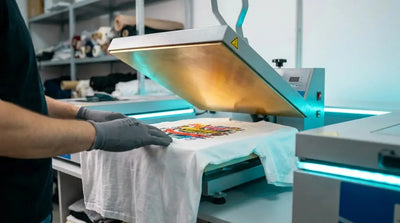
DTF stands for direct-to-film. Instead of printing onto the garment itself, a DTF printer lays your design onto a sheet or roll of PET film using specialized water-based pigment inks, including a white ink layer. While the ink is still wet, a hot-melt adhesive powder is applied to the back of the print, then cured so it fuses to the ink. The result is a finished transfer: your full-color design sitting on a film backing, ready to go. When you want to decorate a shirt, you position the transfer, press it with a heat press, peel the film, and the design bonds permanently to the fabric.
Two things make this process special. First, the dedicated white ink layer is printed underneath the colors, which means your artwork stays bright and opaque even on black or deeply colored garments. That white underbase is the secret behind DTF looking so vibrant on dark shirts. Second, the hot-melt adhesive bonds to a huge range of materials, so the same transfer works on cotton, polyester, blends, canvas, and more. You are not limited by the fabric the way you are with DTG or sublimation.
The DTF workflow step by step
In practice the flow is simple and repeatable. The design is prepared digitally, with no color separations and no screens to burn. It is printed onto film with a white underbase. Adhesive powder is applied and melted. The transfer is cured and cooled. Then it is pressed onto the garment with heat and pressure, and the carrier film is peeled away. Because the transfer is made first and applied second, you can print transfers in advance and press them whenever you are ready, which is great for on-demand and short-run work. It also means the garment never has to go through the printer, so a wrinkled or awkward item is not a problem.
Why DTF grew so fast
DTF solved a real pain point. Screen printing is fantastic at volume but clumsy for small, colorful jobs. DTG is beautiful on cotton but fussy on blends and polyester and needs pretreatment. Sublimation is gorgeous but locked to polyester. DTF arrived offering full-color digital printing with no minimums, strong durability, and near-universal fabric compatibility. For a small brand, an Etsy seller, a school booster club, or a shop that needs ten shirts in three colors today, that flexibility is transformative. It is why DTF has become the default recommendation for so many custom apparel jobs, and why the DTF vs screen printing debate even exists. For ready-made options you can press at home, browse our ready-to-press transfers and blanks.
What DTF is commonly used for
Because DTF is so flexible, it shows up almost everywhere custom apparel is made. Small brands use it to launch merch lines without committing to huge inventory, since there is no minimum and every design costs the same to produce regardless of color count. Schools, churches, and booster clubs rely on it for spirit wear, fundraiser shirts, and event apparel where the order is modest and the artwork is colorful. Businesses use it for uniforms, promotional shirts, and branded hats. Crafters and online sellers love ready-to-press transfers because they can hold stock of popular designs and press them onto garments as orders come in, which keeps overhead low and turnaround fast. The same transfer can decorate a t-shirt, a hoodie, a tote bag, or a cap, which means one print method covers an entire product catalog.
There is also a close cousin worth knowing about. UV DTF is a related process that produces durable, full-color decals for smooth hard surfaces like tumblers, cups, bottles, and other drinkware. Instead of heat pressing onto fabric, a UV DTF decal is applied to the hard surface and bonds permanently without heat. It is the simplest way to put crisp, colorful, long-lasting designs on hard goods, and it rounds out what the DTF family can decorate. Standard fabric DTF and UV DTF together cover almost every custom product a small business is likely to sell.
What Is Screen Printing?
Screen printing is the oldest and most established of the four methods, and for good reason. The process works by creating a stencil, called a screen, for each color in your design. Ink is pushed through the open areas of the mesh onto the garment with a squeegee, one color at a time. Each color needs its own screen and its own pass. Once the screens are set up, you can run the same design over and over very quickly and very cheaply, which is why screen printing dominates large orders.
The signature of screen printing is the ink itself. Plastisol and water-based inks lay down a solid, durable layer of color that bonds strongly to the fabric when cured. Screen-printed designs are known for bold, punchy color and excellent longevity. A well-cured screen print can look great wash after wash for years. That durability, combined with low per-piece cost at scale, is why team uniforms, event shirts, merch runs, and corporate orders so often go the screen printing route.
Where screen printing shines
Screen printing is at its best when you are producing a large quantity of the same design with a limited number of colors. Think a few hundred or a few thousand shirts with a one, two, or three color logo. The upfront work of making the screens is spread across the whole run, so each additional shirt costs very little. Solid spot colors look superb, and specialty inks like metallic, puff, and high-density effects open creative doors that digital methods cannot easily match.
Where screen printing gets tricky
The limitations show up with small orders and complex art. Every color requires a separate screen, so a full-color or photographic design becomes expensive and labor-intensive to separate and print. For a small batch, the setup cost per shirt is high because there are so few shirts to absorb it. And once the screens are made, changing the design means making new screens. So while screen printing is unbeatable for big, simple runs, it is the wrong tool for a short run of a detailed, multi-color graphic. That is exactly the gap DTF fills, which brings us to the comparison most people are searching for.
It is worth stressing that none of this makes screen printing inferior. It is simply specialized. A screen printer producing five hundred two-color shirts will almost certainly beat any digital method on cost per piece, and the finished prints carry a bold, tactile ink character that many brands specifically want. The decline in screen printing's per-shirt cost as volume rises is steep and real, which is why it remains the backbone of the merch, promotional, and uniform industries. The method only looks weak when you force it to do something it was never designed for, like a one-off full-color photo on a dark blend. Choose the job that fits the tool, and screen printing is extraordinary.

What Is DTG Printing?
DTG stands for direct-to-garment. It works like a specialized inkjet printer for fabric: the garment is loaded onto a platen and the printer sprays water-based inks directly into the fibers of the shirt. Because the ink soaks into the fabric rather than sitting on top of it, DTG produces an extremely soft result. On a quality cotton tee, a DTG print can feel like it is part of the shirt, with almost no hand or texture at all. For full-color and photographic designs on cotton, DTG delivers a beautiful, detailed, natural-looking print.
DTG is a digital process, so like DTF there are no screens, no color separations, and no minimums. You can print one shirt or one hundred, and complex art with thousands of colors costs the same to print as a simple one. That makes DTG a favorite for print-on-demand cotton apparel and for designs where a soft, broken-in feel matters.
The cotton requirement
DTG's strength is also its constraint. The inks are formulated to bond with natural fibers, so DTG performs best on 100 percent cotton or high-cotton blends. On polyester and poly-heavy blends, results can be inconsistent because the ink does not bond the same way. Printing on dark garments also requires a white underbase, and that step needs pretreatment of the fabric plus careful curing to look right and last. When everything is dialed in on cotton, DTG is gorgeous. Push it onto the wrong fabric and the quality and durability can suffer. This fabric sensitivity is the heart of the DTF vs DTG decision, which we cover in depth next.
Where DTG shines and where it does not
DTG is at its very best on soft, high-quality cotton tees with detailed or photographic artwork, especially on light-colored garments where no white underbase is needed. In that scenario the print is soft, detailed, and natural, and the process is quick with no setup. It is a favorite for premium cotton apparel brands, print-on-demand cotton catalogs, and anyone who prizes a barely-there hand. Where it struggles is exactly where DTF excels: polyester, poly-heavy blends, and dark garments that demand a heavy, perfectly cured underbase. If your product line mixes fabrics or leans heavily on dark blanks, DTG asks more of the process and can be less forgiving than DTF. That contrast is precisely why so many people weigh DTF against DTG before committing.
What Is Sublimation Printing?
Sublimation is a dye process, not an ink-on-top process. A design is printed with special sublimation dyes onto transfer paper, then heat and pressure turn those solid dyes into a gas that penetrates and bonds with polyester fibers or a polymer coating. As it cools, the dye becomes a permanent part of the material. Because the color lives inside the fibers rather than on the surface, a sublimation print has literally zero hand. The printed area feels exactly like the unprinted fabric, and the color will not crack, peel, or fade the way a surface print eventually can.
Sublimation is spectacular for all-over prints, edge-to-edge designs, and hard goods. It is the go-to for performance jerseys, polyester athletic wear, mugs, mouse pads, phone cases, and other poly-coated products. The finish is seamless and the durability inside the material is excellent.
The polyester and light-color limits
Sublimation has two firm rules. First, it only works on polyester or polymer-coated surfaces. On cotton, the dye has nothing to bond with, so it washes out. Second, because the dye is translucent, it only shows true on white or very light substrates. You cannot sublimate a bright design onto a dark shirt, and you cannot sublimate cotton at all. Those rules make sublimation phenomenal within its lane and useless outside of it. That is why the DTF vs sublimation comparison usually comes down to one question: what fabric and color are you printing on?
Within its lane, though, sublimation is genuinely unmatched. Because the dye becomes part of the material, the print cannot peel, crack, or flake, and it will not fade the way a surface print eventually can. There is no hand to the print at all, which is why high-performance athletic jerseys favor it: the design does not trap heat or sweat the way a thick surface print might. It also enables true all-over printing, with color running seamlessly from edge to edge and across seams, something no surface method can replicate as cleanly. For white and light polyester garments and for poly-coated hard goods, sublimation produces a result the other three methods simply cannot match. The catch is always the same: the moment cotton or a dark garment enters the picture, sublimation steps aside and DTF takes over.
04
DTF vs DTG: The Comparison Dallas Searches Most
Let's tackle the matchup that generates the most questions: DTF vs DTG. Both are digital, full-color, no-minimum methods, so on paper they look similar. The real differences come down to how the ink is applied, what fabrics each one loves, how they feel, and how they wear over time. If you take one thing from this section, let it be this: DTG prints into the garment for the softest hand on cotton, while DTF prints onto a transfer that bonds to almost anything and tends to be more durable and more versatile across fabrics.
How they apply the ink
DTG sprays ink directly into the fibers of the shirt, so the color becomes embedded in the cotton. DTF prints your design onto film first, then bonds that film print to the garment with adhesive and heat, so the color sits in a thin flexible layer on the surface. This single difference explains almost everything else. Because DTG ink soaks in, it feels incredibly soft but depends completely on the fabric accepting the ink. Because DTF sits on top in a bonded layer, it works on fabrics that would never accept DTG ink, and that layer is engineered to flex and endure.
DTF vs DTG durability
Durability is the single most searched angle of this comparison, and here DTF generally has the edge, especially on dark and synthetic garments. The DTF adhesive creates a strong, flexible bond with the fabric, and the print is designed to resist cracking and fading through repeated washing when it is pressed and cured correctly. DTG, because it relies on ink absorbed into the fibers, can gradually lose some intensity over many wash cycles, and on darker cotton the underbase has to be cured perfectly to hold up. Both methods last a long time when done right, but if longevity on a dark or blended garment is your priority, DTF is the safer bet. To keep any print looking its best, wash inside out in cold water and skip high-heat drying.
DTF vs DTG on dark shirts
On dark garments, DTF has a clear advantage because its white underbase is printed as a solid foundation beneath the colors, blocking the shirt color from muting the design. The result is bright, opaque color on black and other dark fabrics with a very consistent process. DTG can absolutely print on dark shirts too, but it requires pretreatment and a carefully cured white underbase, which adds steps and sensitivity. For bright art on dark cotton, DTF is typically the more reliable and repeatable choice. For custom work on dark blanks, see our custom printed t-shirts.
DTF vs DTG on feel and fabric
This is where DTG wins its points. On a soft cotton tee, DTG gives the most natural, barely-there hand of any method here, because the ink is in the shirt rather than on it. If your top priority is a premium, vintage-soft feel on 100 percent cotton, DTG is hard to beat. DTF has a slightly more present feel because of its thin surface layer, though modern DTF is thin and flexible, not stiff. On fabric range, DTF wins decisively. DTG wants cotton, while DTF handles cotton, polyester, blends, and more without changing the process. So the honest DTF vs DTG verdict is: choose DTG for the softest hand on cotton, and choose DTF for versatility, dark-garment vibrancy, and durability across fabrics.
DTF vs DTG for a growing apparel business
If you are deciding between these two from a business point of view, the workflow difference matters as much as the print quality. DTG prints onto the finished garment one at a time, which ties up the printer and the garment together and often requires pretreatment and curing steps per piece, especially on dark shirts. DTF decouples the printing from the pressing. You can print a stack of transfers ahead of time, store them, and press them onto garments whenever orders arrive. For a shop juggling many small orders, variable designs, or a mix of garment types, that decoupling is a real operational advantage. It also means you are not limited to garments that fit on a DTG platen, so oddly shaped items and thicker pieces are easier to decorate.
There is also the question of what you stock. With DTF you can hold ready-to-press designs and a rack of blank garments, then combine them on demand, which keeps inventory flexible and cash tied up in fewer finished goods. With DTG you commit a garment the moment you print it. Neither approach is wrong, but for the small and growing brands we see most often, DTF's print-ahead model tends to fit the way orders actually come in. When the priority is the softest possible cotton tee and the order flow is steady, DTG remains a beautiful choice.

05
DTF vs Screen Printing: The Classic Matchup
Now the headline comparison: DTF vs screen printing. These two are often pitted against each other because they overlap on durable apparel decoration, but they come at it from opposite directions. Screen printing is analog, physical, and volume-driven. DTF is digital, flexible, and designed for full color without minimums. Neither is universally better. The right choice depends almost entirely on your order size, color count, and fabric.
Color and detail
DTF prints unlimited colors, gradients, and photographic detail in a single pass with no extra cost for complexity. Screen printing reproduces a limited number of spot colors beautifully, but every additional color means another screen, another setup, and more cost. For a simple one or two color logo, screen printing is clean and efficient. For a detailed, multi-color, or photo-realistic design, DTF is dramatically simpler and usually the better result. If your art has more than a few colors, DTF almost always makes more sense.
Cost at low vs high volume
This is the deciding factor for most buyers, and it is all about the shape of the cost curve rather than any specific figure. Screen printing has significant upfront setup because each color needs a screen, so small orders carry a high cost per piece. But as the quantity grows, that setup is spread thinner and thinner, and the per-shirt cost keeps falling. At large volumes, screen printing becomes extremely economical per piece. DTF has essentially no setup, so a single piece costs about the same per unit as many pieces. The DTF curve is relatively flat, while the screen printing curve starts high and drops steeply. The practical takeaway: for small and mid-size runs, DTF is usually the better value, and somewhere in the large-order range screen printing pulls ahead on cost per shirt. We cover this in more detail in the cost section below.
Setup and minimums
DTF has no minimums and no setup, so you can order one piece or a few without penalty. Screen printing effectively requires a minimum order to justify the screen setup, and reorders are fast once the screens exist but re-setup is needed if screens are not kept. If flexibility and small runs matter, DTF wins here easily. If you are placing a big standing order of the same design, screen printing's setup becomes a one-time cost you happily absorb.
Durability and feel
Both methods are durable when done correctly. A well-cured screen print has a reputation for outstanding longevity and a classic ink finish, and many people love that solid, slightly raised spot-color look. DTF is also very durable, with a thin flexible bonded layer that resists cracking and fading through normal washing. On feel, a lightweight screen print and a modern DTF print are both comfortable, and preferences vary. The bigger differentiator remains volume and color count, not durability.
Fabric compatibility
DTF bonds to a wide range of fabrics and excels on dark and mixed materials thanks to its white underbase. Screen printing also works on many fabrics, though certain substrates and dye-migration-prone polyesters require specific inks and know-how. For mixed fabric orders or tricky materials, DTF's near-universal compatibility is a real convenience. For custom apparel across tees, hoodies, and more, explore our custom apparel printing.
The honest summary of DTF vs screen printing
Put simply, the DTF vs screen printing choice is really a question about three things: how many pieces you are ordering, how many colors are in your design, and what fabric you are printing on. If you are ordering a small or mid-size run, if your design has more than a couple of colors, or if you are printing dark or mixed fabrics, DTF is usually the better fit. If you are ordering a large quantity of the same simple design on a straightforward fabric, screen printing will often give you a lower cost per shirt and a finish many brands prize. Both are durable and professional when done well. Neither is a compromise. They are built for different jobs, and the smart move is to pick the one that matches the job in front of you rather than defaulting to one for everything.
06
DTF vs Sublimation: Fabric Decides It
The DTF vs sublimation comparison is the most clear-cut of the three, because sublimation has firm material rules. Sublimation dyes bond only with polyester or polymer-coated surfaces, and they only show true color on white or light substrates. DTF, by contrast, works on cotton, polyester, blends, and dark or light garments alike. So for most people deciding between the two, the fabric and color of the item answers the question before anything else.
DTF vs sublimation on cotton vs polyester
If you are printing cotton, sublimation is off the table. The dye has nothing to bond with on cotton and will wash away, so DTF is the only real option of the two for cotton apparel. If you are printing white or light polyester, sublimation is excellent and gives a flawless, texture-free result. For blends, it depends on the polyester content: the lower the polyester percentage, the more muted a sublimation print becomes, while DTF prints vividly on blends regardless. In short, sublimation owns white and light polyester, and DTF owns everything else, including all cotton and all dark garments.
This is why, for a typical custom apparel shop that prints on a mix of cotton tees, blended hoodies, and dark garments, DTF ends up being the workhorse while sublimation is reserved for specific polyester jobs. If your entire product line is white or light polyester, sublimation can genuinely be your primary method and reward you with a beautiful, permanent, texture-free result. But the moment your catalog includes cotton or dark colors, which describes most apparel businesses, you need a method that is not limited by fiber content, and that is exactly where DTF earns its keep. The two methods rarely compete head to head in practice, because the fabric usually decides the winner before any other factor comes into play.
Feel and finish
Sublimation's standout quality is that it has no hand at all. Because the dye is inside the fibers, the printed area feels identical to bare fabric, which is ideal for performance wear and all-over designs. DTF has a thin surface layer, so there is a slight feel to the print, though it stays flexible and comfortable. If a completely texture-free finish on polyester is the goal, sublimation is unmatched. If you need to print cotton, dark colors, or mixed fabrics, that advantage does not apply because sublimation cannot do the job in the first place.
Hard goods and all-over prints
Sublimation extends beyond apparel to hard goods like mugs, coasters, and other poly-coated items, and it is the method of choice for all-over, edge-to-edge garment prints on polyester. There is a related variant worth knowing about for drinkware and smooth hard surfaces: UV DTF, which applies durable full-color decals to cups, tumblers, bottles, and more. If cup wraps are what you need, take a look at our custom UV DTF cup wraps. For soft goods in cotton or dark colors, standard DTF remains the versatile pick.

07
Master Comparison Table: DTF vs Screen Print vs DTG vs Sublimation
Here is the full side-by-side so you can scan every factor at once. Remember that cost is shown in relative terms only, because real pricing depends on your design, garment, and quantity. Use this as a map of tendencies, not a guarantee for any single job.
| Factor | DTF | Screen Printing | DTG | Sublimation |
|---|---|---|---|---|
| Setup and minimums | No setup, no minimum; order one or many | Screen setup per color; works best with a minimum order | No setup, no minimum | No screens; needs compatible blanks |
| Cost at low volume | Low and consistent per piece | High per piece due to setup | Low per piece | Low per piece on polyester |
| Cost at high volume | Stays relatively flat per piece | Very low per piece; most economical at scale | Stays relatively flat per piece | Stays relatively flat per piece |
| Color and detail | Unlimited colors, gradients, photographic detail | Bold spot colors; cost rises with each color | Unlimited colors, photographic detail | Unlimited colors, all-over possible |
| Feel and hand | Thin flexible surface layer, slight feel | Solid ink layer, classic slightly raised feel | Softest hand, ink absorbed into cotton | Zero hand, dye inside the fibers |
| Durability and wash | Very durable, resists cracking when cured right | Excellent, long-lasting when cured right | Good on cotton, can soften over many washes | Excellent, dye is permanent in polyester |
| Fabric compatibility | Cotton, polyester, blends, most fabrics | Many fabrics; polyester needs the right ink | Best on cotton and high-cotton blends | Polyester or poly-coated only |
| Dark garments | Excellent, white underbase keeps color bright | Excellent with underbase ink | Works with pretreatment and white underbase | Not suitable, needs white or light substrate |
| Turnaround | Fast, transfers can be made ahead and pressed | Longer setup, then fast on large runs | Fast for small digital runs | Fast on compatible blanks |
| Best at | Small to mid runs, full color, any fabric, dark shirts | Large runs of simple, few-color designs | Soft full-color prints on cotton | White or light polyester and hard goods |
08
Cost: Low Volume vs High Volume Explained
Cost is where most decisions are made, so it deserves a closer look. We will keep everything in relative terms, because the actual numbers swing with garment choice, design complexity, color count, and quantity. What matters is understanding the shape of each method's cost curve, because that shape tells you which method wins at your order size.
Why screen printing gets cheaper at scale
Screen printing front-loads its cost. Making the screens, mixing the inks, and setting up the press takes time and labor before a single shirt is printed. That cost is fixed no matter how many shirts you run. So on a small order, that setup is divided across only a few pieces, making each one relatively expensive. On a large order, the same setup is divided across hundreds or thousands of pieces, so the per-shirt cost drops dramatically. This is why screen printing is the standard for big merch runs, team orders, and events: the more you print, the better the deal per piece.
Why DTF stays consistent
DTF has essentially no setup. There are no screens, no color separations, and no press configuration that scales with color count. Each transfer costs roughly the same to produce, so the per-piece cost is relatively flat whether you order one or a few hundred. That flat curve is a massive advantage for small and mid-size orders, because you are not paying a setup penalty. It also means complexity is free: a ten-color photographic design costs the same to print as a one-color logo. For short runs, variable designs, and full-color art, DTF is typically the most economical choice.
The DTG and sublimation cost curves behave much like DTF's, because they are also digital or transfer processes without per-color setup. DTG stays relatively flat per piece and does not care how many colors are in the art, which makes it economical for small cotton runs. Sublimation likewise holds a steady per-piece cost on compatible polyester blanks. So the real cost outlier in this group is screen printing, which is the only method that trades high upfront setup for a steeply falling per-piece cost at volume. That is why, when people ask which method is cheapest, the honest answer always circles back to quantity and color count rather than a single ranking.
Which is cheaper, DTF or screen printing?
The honest answer is that it depends on quantity and color count. For small and mid-size runs, DTF is usually cheaper because there is no setup to absorb. As the order grows large and the design stays simple with few colors, screen printing's declining curve eventually crosses below DTF and becomes the cheaper option per piece. The more colors your design has, the larger the order needs to be before screen printing wins, because each color adds setup. So a simple one-color design flips to screen printing sooner, while a full-color design stays in DTF's favor much longer. If you are unsure where your job lands, the smart move is to compare both for your specific quantity and art. We are always happy to help you run that comparison for your project before you commit.

09
Durability and Wash Performance Compared
A print is only as good as it looks after fifty trips through the laundry, so durability matters as much as the initial result. All four methods can last a long time when they are applied and cured properly. The differences are in how they fail over time and which fabrics they hold up best on.
Does DTF crack or peel?
A properly pressed and cured DTF print should not crack or peel under normal use. The adhesive forms a strong, flexible bond with the fabric, and the print layer is designed to stretch and move with the garment. Cracking or peeling almost always traces back to an application problem: not enough heat, not enough pressure, not enough time, or improper curing. When the process is done right, DTF holds up very well through repeated washing. Caring for it properly, washing inside out in cold water and avoiding high-heat drying and harsh bleaching, extends its life considerably.
How the four methods age
Screen printing with well-cured ink is famous for longevity and tends to stay bold for a long time, though a heavy ink deposit can eventually show wear at high-flex points. DTF resists cracking and fading when cured correctly and performs especially well on dark and blended fabrics. DTG is durable on cotton but, because the ink is absorbed, can gradually soften in intensity over many washes, and dark-garment prints depend heavily on good pretreatment and curing. Sublimation is the most permanent of all within its lane, because the dye becomes part of the polyester and simply cannot peel or crack, though it is only an option on compatible polyester. The common thread is that application quality is the real determinant of durability for every method.
It is worth being precise about what durability actually means here, because it is not one single quality. There is resistance to cracking when the fabric stretches, resistance to fading when the color meets detergent and sunlight, and resistance to lifting at the edges over time. Surface methods like DTF and screen printing depend on a strong, flexible bond to resist cracking and lifting, which is why curing is so critical. In-fiber methods like DTG and sublimation cannot lift or peel because there is no separate layer to lift, but the absorbed color can soften or shift in intensity over a long life. The upshot is that a well-executed print in any of these four methods will comfortably outlast casual expectations, and a poorly executed one in any method will disappoint. Process discipline matters more than the method name on the label.
Care tips that apply to all methods
No matter which method you choose, a few habits dramatically extend print life. Turn garments inside out before washing. Use cold water and a gentle cycle. Skip bleach and harsh detergents. Avoid high-heat drying, and never iron directly on top of a print. These simple steps protect surface prints like DTF, DTG, and screen printing, and keep colors looking fresh for far longer.
10
Fabric Compatibility and Garment Color
Fabric is often the factor that quietly decides the whole comparison, because some methods simply cannot print on some materials. Getting this right the first time saves you from disappointing results.
Cotton
Cotton is DTG's home turf and gives the softest DTG result. DTF also prints beautifully on cotton with strong durability. Screen printing handles cotton excellently. Sublimation cannot print on cotton at all, since the dye has nothing to bond with. So for cotton, your real choices are DTF, DTG, or screen printing, with the decision coming down to order size and feel.
Polyester and performance fabrics
Polyester is sublimation's specialty and gives a flawless, texture-free print on white and light poly. DTF also prints well on polyester and blends and is a strong choice when the garment is dark or when you want the same process across mixed fabrics. DTG struggles on polyester because the ink does not bond the same way. Screen printing can work on polyester but needs the right inks to manage dye migration. For dark or mixed polyester and blends, DTF is usually the most dependable option.
Blends and specialty fabrics
Blends are where DTF really shines, because it does not care about fiber content the way DTG and sublimation do. A 50-50 cotton-poly blend, a tri-blend, canvas, and many specialty fabrics all take DTF well. DTG prefers higher cotton content, and sublimation needs higher polyester content to show vivid color, so both are more restricted. If your order mixes fabric types or you are unsure of the exact blend, DTF removes the guesswork.
Light vs dark garments
Garment color is a major divider. On light garments, every method can perform well within its fabric limits. On dark garments, you need a white underbase, which DTF and screen printing both provide, and which DTG provides with pretreatment. Sublimation cannot print on dark garments because the dye is translucent and needs a light substrate. So if you are printing bright art on black or dark apparel, DTF is one of the most reliable and repeatable choices available. Browse dark-ready blanks and custom options in our custom hoodies and sweatshirts collection.
A note on dye migration and garment prep
One technical issue worth understanding is dye migration, which happens when the dye in a polyester garment, often a bright red or similar color, reactivates under heat and bleeds up into the print, tinting it over time. This is a known challenge for surface methods on certain polyester garments and is managed with the right inks, films, and application settings. DTF is generally well suited to handling tricky polyester because its construction and the right film and powder combination can resist migration, but the quality of the materials and the press settings matter. Screen printing manages it with specialized blocker inks. The practical takeaway for you as a buyer is simple: tell your printer the exact garment you plan to use, especially if it is a vivid polyester, so the right process can be chosen up front. A good shop will flag migration risk before it becomes a problem rather than after.
Garment preparation also differs by method. DTF requires no garment pretreatment, which is one reason it is so convenient across fabric types. DTG, by contrast, needs pretreatment on dark garments to accept the white underbase, and that liquid has to be applied and cured evenly for the print to look right and last. Sublimation needs a compatible polyester or coated blank in the first place. Screen printing needs the garment loaded and registered on the press. These prep differences are invisible in the finished product but they shape turnaround, consistency, and which jobs each method handles gracefully.

11
Which Method to Choose, by Use Case
To make the decision concrete, here is a cheat sheet matching common scenarios to the method that usually fits best. These are starting recommendations; a specific garment or design can shift the answer, which is why it always pays to confirm for your exact job. Read down the left column, find the row that sounds most like your project, and the method on the right is where we would start the conversation.
| Your situation | Best fit | Why |
|---|---|---|
| Small batch with full color or photo art | DTF | No setup, unlimited colors, flat cost per piece |
| Hundreds or thousands of a simple few-color design | Screen printing | Setup spreads out and per-piece cost drops at scale |
| Soft, vintage feel on 100 percent cotton tees | DTG | Ink absorbs into cotton for the softest hand |
| White or light polyester performance wear | Sublimation | Zero-texture, permanent dye in the fibers |
| Bright design on dark or black garments | DTF | White underbase keeps colors opaque and vibrant |
| Mixed fabrics in one order | DTF | Same process bonds to cotton, poly, and blends |
| All-over or edge-to-edge print on polyester | Sublimation | Dye covers the whole surface with no hand |
| Fast turnaround with no minimum | DTF | Transfers can be made ahead and pressed on demand |
| Cup wraps, tumblers, and smooth hard goods | UV DTF or sublimation | Durable full-color decals or permanent dye on poly-coated items |
| Specialty ink effects like puff or metallic | Screen printing | Specialty inks create textures digital cannot match |
12
When to Choose DTF (and When Another Method Wins)
After all of that, here is our grounded take on where DTF is the right call and where we would honestly point you elsewhere. DTF earns its popularity by being the most versatile method on this list, but it is not the automatic answer for every job, and a good shop will tell you so.
Choose DTF when
DTF is the strongest choice when you want full-color or photographic artwork without paying per color, when your order is small to mid-size and you do not want to absorb screen setup, when you are printing dark or mixed fabrics, when you need bright color on black garments, and when you want a fast turnaround with no minimum. It is also ideal for variable designs, where every piece can be different, and for on-demand work where transfers are pressed as orders come in. For the vast majority of small brands, creators, schools, teams, and businesses in Dallas, DTF checks the most boxes, which is why it is the method we reach for most often.
Choose screen printing when
If you are ordering a large quantity of the same design with just a few colors, screen printing will usually beat DTF on cost per piece and gives that classic solid-ink finish. It is also the method for specialty ink effects like puff, metallic, and high-density that digital methods cannot replicate. For big merch drops, event tees, and standing bulk orders of a simple logo, screen printing is often the smarter spend.
Choose DTG when
If your priority is the absolute softest hand on premium 100 percent cotton, and your art is full color or photographic, DTG is a beautiful choice. It is excellent for cotton print-on-demand and for designs where feeling like part of the shirt matters more than fabric flexibility or maximum dark-garment durability.
Choose sublimation when
If you are printing white or light polyester, performance wear, all-over designs, or poly-coated hard goods, sublimation is unmatched. The texture-free finish and permanent dye are perfect within that lane. Just remember it cannot do cotton or dark garments, so it is a specialist rather than an all-rounder.
It is also common to combine methods on a single project, and that is a sign of a shop thinking about your result rather than its own convenience. A brand might screen print a large run of its core logo tee for the best unit cost, then use DTF for limited-edition colorful drops and reorders that are too small to justify new screens. A team might sublimate its polyester performance jerseys while using DTF for the cotton hoodies and hats that sublimation cannot touch. There is no rule that says you must pick one method for your entire catalog. The best outcomes often come from using each method where it is strongest and letting them cover each other's gaps.
The bottom line is that these methods are partners more than rivals. Many shops, including ours, use several of them so we can match the method to the job instead of forcing every job into one process. When DTF is the best fit, we will tell you, and when screen printing, DTG, or sublimation would serve you better, we will tell you that too.

13
Frequently Asked Questions
Is DTF better than screen printing?
It depends on your job. DTF is better for small to mid-size runs, full-color or photographic designs, dark and mixed fabrics, and fast turnaround with no minimums. Screen printing is better for large quantities of a simple, few-color design, where the per-piece cost keeps dropping as the run grows and the classic solid-ink finish is desired. For most short, colorful orders, DTF wins. For big, simple bulk runs, screen printing wins.
Is DTF better than DTG?
DTF is more versatile and generally more durable across fabrics, especially on dark and synthetic garments, because it prints onto a bonded transfer rather than relying on the fabric to absorb ink. DTG produces a softer hand on 100 percent cotton because the ink soaks into the fibers. So DTF is better for fabric flexibility, dark-garment vibrancy, and durability, while DTG is better when you want the softest possible feel on cotton.
Is DTF more durable than DTG?
In most cases, yes, particularly on dark and blended fabrics. The DTF adhesive creates a strong, flexible bond that resists cracking and fading when the print is cured correctly, while DTG ink is absorbed into the fibers and can lose some intensity over many washes. Both last a long time when applied properly, but for durability on dark or synthetic garments, DTF usually has the edge.
Which is cheaper, DTF or screen printing?
For small and mid-size orders, DTF is usually cheaper because there is no screen setup to pay for and extra colors cost nothing. For large orders of a simple, few-color design, screen printing becomes cheaper per piece as the setup cost spreads across more shirts. The more colors in your design, the larger the order needs to be before screen printing wins. The best approach is to compare both for your exact quantity and artwork.
Does DTF crack or peel over time?
A properly pressed and cured DTF print should not crack or peel under normal wear. The print layer is designed to flex with the fabric. Cracking or peeling is almost always caused by application issues such as insufficient heat, pressure, time, or curing. Washing inside out in cold water and avoiding high-heat drying will keep a DTF print looking great for a long time.
Is DTF good for dark shirts?
Yes. DTF is one of the best methods for dark garments because it prints a solid white underbase beneath the colors, which blocks the shirt color from muting the design. The result is bright, opaque artwork on black and other dark fabrics with a consistent, repeatable process, which is a key advantage over methods that cannot print on dark substrates.
DTF vs sublimation: which is better for cotton vs polyester?
For cotton, DTF is the clear choice because sublimation cannot bond to cotton and will wash out. For white or light polyester, sublimation gives a flawless, texture-free result that is excellent within that lane. For blends, DTF prints vividly regardless of fiber content, while sublimation becomes muted as polyester content drops. In short, DTF for cotton, blends, and dark garments, and sublimation for white or light polyester and hard goods.
Which method is best for small batches versus bulk?
For small batches, DTF and DTG both excel because they have no setup and no minimums, with DTF adding fabric versatility and dark-garment strength and DTG adding the softest cotton hand. For bulk orders of a simple design, screen printing is typically the most economical per piece. The crossover point depends on how many colors your design has, so comparing both for your specific run is always worthwhile.
14
The Bottom Line: Match the Method to the Job
There is no single winner in the DTF vs screen printing vs DTG vs sublimation debate, because each method is the best at something. DTF is the versatile all-rounder that handles full color, dark and mixed fabrics, small runs, and fast turnaround with no minimums. Screen printing is the value champion for large, simple runs and specialty ink effects. DTG delivers the softest hand on cotton. Sublimation is unbeatable on white and light polyester and hard goods. The smartest decision is not loyalty to one method, it is matching the right method to your garment, your design, your order size, and your deadline.
For most custom apparel jobs we see in Dallas, especially small to mid-size orders with full-color art on cotton, blends, or dark garments, DTF is the method that checks the most boxes. If you are ready to put your design on shirts, hoodies, hats, or more, explore our custom printed t-shirts and custom ball caps and hats, or start from the DTF Dallas homepage to find the right fit for your project. Tell us your garment, quantity, and artwork, and we will help you choose the method that gives you the best result for the best value.
Ready to press your next design?
Browse hundreds of ready-to-press DTF transfers, printed in Dallas and built to last.
Browse DTF Transfers
Contents0%
- 01Key Takeaways: DTF vs Screen Printing vs DTG vs Sublimation
- 02The Four Printing Methods at a Glance
- 03How Each Printing Method Works
- 04DTF vs DTG: The Comparison Dallas Searches Most
- 05DTF vs Screen Printing: The Classic Matchup
- 06DTF vs Sublimation: Fabric Decides It
- 07Master Comparison Table: DTF vs Screen Print vs DTG vs Sublimation
- 08Cost: Low Volume vs High Volume Explained
- 09Durability and Wash Performance Compared
- 10Fabric Compatibility and Garment Color
- 11Which Method to Choose, by Use Case
- 12When to Choose DTF (and When Another Method Wins)
- 13Frequently Asked Questions
- 14The Bottom Line: Match the Method to the Job
Comments 0
Be the first to leave a comment.