
DTF Transfers: The Complete Guide (2027)
Oct 17, 2026
Complete Guide22 min read14 chapters
DTF transfers have quietly become one of the most popular ways to put full-color, long-lasting graphics on apparel, and for good reason. If you have ever wanted custom shirts, hoodies, hats, or tote bags without buying a printer, learning screen printing, or committing to large minimums, DTF transfers are probably the answer you have been looking for. In this complete guide we break down exactly what DTF transfers are, how direct to film printing works, the difference between ready to press transfers and gang sheets, how UV DTF and specialty options like glitter and puff fit in, which fabrics they stick to, how durable they are, and how to order and apply them at home or in a production shop.
Whether you are a crafter pressing your first shirt, a small business scaling a clothing line, or a Dallas-area brand searching for DTF transfers near me, this guide is written to take you from complete beginner to confident buyer. By the end you will understand the technology, know which format to order, and feel ready to press your first design with confidence. Let us start with the basics.
Key takeaways
- DTF stands for direct to film. A design is printed onto a special PET film, coated with an adhesive powder, cured, and then heat pressed onto fabric.
- Ready to press DTF transfers arrive printed and finished. You only need a heat press or a quality iron to apply them, no printer required.
- Gang sheets pack many designs onto one large sheet so you can get more prints out of a single order and cut them apart yourself.
- UV DTF transfers are peel and stick graphics for hard surfaces like cups, tumblers, and glass. No heat press is needed.
- DTF works on cotton, polyester, blends, and many other fabrics, and the prints are built to survive repeated washing when applied correctly.
- Specialty finishes such as glitter and puff add texture and dimension to standard DTF prints.
- You can order custom DTF transfers by size, by design, or as a gang sheet, and apply them in seconds with the right time, temperature, and pressure.

01
What Are DTF Transfers?
DTF transfers are custom designs that have been printed onto a special film and finished with a heat-activated adhesive so they can be pressed onto fabric. The letters DTF stand for direct to film, which describes exactly how the method works: instead of printing directly onto a garment, the printer lays the design down on a sheet of film first, and that film becomes the carrier that delivers the graphic to your shirt, hoodie, bag, or hat.
The easiest way to picture a DTF transfer is to think of a high-quality, full-color sticker for clothing that bonds permanently once heat and pressure are applied. The design sits on a clear carrier film until you press it. After pressing and peeling, the ink and adhesive stay fused into the fibers of the fabric, and the film comes away clean.
What is a DTF transfer, in plain terms?
A DTF transfer is a ready-made print. The hard part, the actual printing, has already been done on professional equipment. What you receive is a finished sheet that carries your artwork in full color, complete with a white ink layer underneath so the colors show up correctly even on dark garments. You supply the heat press, position the transfer, press, and peel. That is the whole idea.
This is a big reason DTF transfers have grown so fast. Older decoration methods each had a catch. Vinyl requires weeding and layering for multicolor designs. Screen printing needs separate screens for each color and makes sense mostly at higher volumes. Direct to garment printing needs an expensive printer and pretreatment. DTF transfers remove those hurdles: you get photo-quality, multicolor, gradient-friendly prints with no minimum and no printing hardware of your own.
What makes DTF transfers different
Several qualities set DTF transfers apart from other options:
- Full color in a single print. Gradients, fine detail, small text, and photographic artwork all print at once. There is no color-by-color setup.
- No weeding. Unlike cut vinyl, you do not have to pick out tiny negative spaces by hand.
- Works on light and dark fabrics. A white ink underbase makes colors pop on black, navy, and other dark garments.
- No minimum order. You can order a single transfer or hundreds.
- Soft, flexible feel. A well-made DTF print flexes with the fabric rather than sitting on top like a stiff patch.
If you have ever searched for custom DTF transfers for shirts and wondered how a small shop can offer thousands of designs with no setup fees, this is how. The transfers are printed on film, stored flat, and shipped ready to press.
A short history of how DTF transfers took off
Custom apparel decoration has gone through several eras. For decades, screen printing ruled the industry, prized for bold, durable prints but limited by setup time and color counts. Then heat transfer vinyl made short runs and personalization accessible to hobbyists. Direct to garment printing brought photographic detail to cotton. Each advance solved one problem while leaving others open.
DTF transfers emerged as a way to combine the best traits of those methods: the full-color detail of direct to garment, the no-minimum flexibility of vinyl, and durability that rivals quality screen prints, all while working across a far wider range of fabrics. Because the design lives on film until it is pressed, DTF also decoupled printing from decorating. A shop could print transfers in advance and ship them anywhere, and a customer with nothing but a heat press could produce studio-quality apparel on demand. That separation of printing from pressing is the innovation that turned DTF into one of the most widely adopted decoration methods for small businesses and crafters alike.
Who uses DTF transfers?
The appeal of DTF transfers cuts across a surprisingly broad audience, which is part of why demand has grown so quickly. Typical users include:
- Crafters and hobbyists who want to personalize shirts, gifts, and home items without owning a printer.
- Small apparel brands launching clothing lines without the overhead of screens or large minimum orders.
- Print shops and decorators adding full-color capability without a major equipment investment.
- Schools, teams, and clubs ordering spirit wear, event shirts, and fundraiser apparel.
- Event and promotional businesses producing branded merchandise, giveaways, and uniforms.
- Side hustlers and online sellers fulfilling custom orders one at a time with no inventory risk.
What ties all of these users together is the same core benefit: professional results without the barriers that used to make custom apparel expensive or complicated.
02
What Is DTF Printing and What Does DTF Mean in Printing?
Now that you know what the finished product is, let us answer the questions people search most often: what is DTF printing, what does DTF mean in printing, and what is a DTF printer? Understanding the method helps you buy smarter and troubleshoot better.
What does DTF mean in printing?
In printing, DTF means direct to film. It is a transfer printing process in which artwork is printed onto a coated PET film using specialized inks, then bonded with a hot-melt adhesive powder, cured with heat, and finally transferred to a garment with a heat press. The phrase describes the defining feature of the method: the ink goes onto film first, not straight onto the fabric.
This distinguishes DTF from direct to garment printing, where ink is sprayed directly onto the shirt. With DTF the film acts as a middle step, which is what makes the prints so portable. A transfer can be printed today and pressed weeks later, by someone else, in a completely different location.
What is DTF printing as a process?
DTF printing is the full workflow that turns a digital design into a pressable transfer. At a conceptual level it involves printing color and white ink onto film, applying adhesive powder to the wet ink, melting and curing that powder so it bonds to the print, and then cooling the sheet so it is ready to store or press. We walk through each stage in detail in the next section.
The output of DTF printing is what the industry calls a transfer. When a shop prints many designs at once on a large film and sells it as a finished product, you get the ready to press transfers and gang sheets covered later in this guide.
What is a DTF printer?
A DTF printer is a specialized inkjet machine built to print on film rather than paper. It differs from an ordinary office printer in a few important ways:
- It prints with pigment inks formulated for textile transfer, including a dedicated white ink channel in addition to the usual cyan, magenta, yellow, and black.
- It is designed to lay down a white underbase, the layer that lets colors appear vivid on dark fabric.
- It feeds and handles PET film cleanly, either as cut sheets or on a roll for continuous printing.
- It pairs with a curing unit, often a powder shaker and dryer, that applies and melts the adhesive powder.
As a buyer of ready-made DTF transfers you do not need to own any of this equipment. The printer, inks, film, powder, and curing hardware all live at the print shop. You are simply purchasing the finished result, which keeps your costs and complexity low. For anyone who wants to run the process end to end, understanding the printer is the first step, but most people are better served buying transfers ready to press.

03
How DTF Transfers Are Made: The DTF Process Step by Step
People searching for how to make DTF transfers, or how to make DTF transfers at home, usually want to understand the mechanics even if they ultimately buy finished transfers. Here is the direct to film process explained stage by stage, at a conceptual level, covering film, ink, powder, and the heat press.
Step 1: Prepare and mirror the artwork
Everything starts with the design file. The artwork is cleaned up, sized, and the colors are set for printing. Because the transfer is pressed face down onto the garment, the image is printed in reverse, or mirrored, so it reads correctly once it is applied. Good preparation at this stage, clean edges, correct resolution, and proper color, is what separates a crisp professional transfer from a muddy one.
Step 2: Print color and white ink onto PET film
The prepared design is printed onto a sheet or roll of PET film, the clear carrier that holds the print. The DTF printer lays down the color layers using CMYK inks, then prints a layer of white ink behind the colors to form the underbase. That white layer is essential: without it, a design pressed onto a dark shirt would look dull and see-through. With it, even bright colors on black fabric stay true.
Step 3: Apply adhesive powder
While the ink is still wet, a fine hot-melt adhesive powder is applied across the printed areas. This powder, commonly a TPU-based thermoplastic adhesive, is what will eventually bond the ink to the fabric. In a production shop a powder shaker coats the print evenly and shakes off the excess so adhesive sticks only where there is ink.
Step 4: Cure the powder
Next the powdered film passes through a curing stage, usually a dryer or oven, where controlled heat melts the adhesive powder and fuses it to the ink. Curing is a balancing act: enough heat to melt the powder fully, but not so much that the transfer scorches or becomes brittle. Proper curing is one of the biggest factors in how well a transfer will adhere and how long it will last on the garment.
Step 5: Cool and store as a ready to press transfer
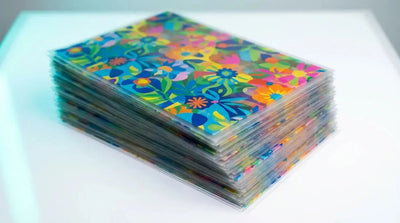
Once cured and cooled, the film is finished. At this point it is a ready to press transfer. It can be stacked, rolled, stored flat, and shipped without losing quality. This shelf stability is what makes the whole DTF model work, because a shop can print designs in advance and send them to customers anywhere.
Step 6: Heat press onto the garment
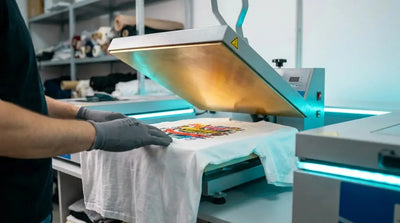
The final stage happens wherever the transfer is used. The transfer is placed face down on the fabric and pressed with heat and firm pressure. The melted adhesive flows into the fibers, the ink bonds, and after peeling the carrier film the design is left on the garment. We cover the exact application steps later in this guide.
Can you make DTF transfers at home?
Technically yes, but there are tradeoffs worth understanding. Making DTF transfers at home means investing in a DTF printer, white and CMYK inks, PET film, adhesive powder, and a reliable way to cure the powder, plus the know-how to manage white ink maintenance and color profiles. It is a real workflow with a learning curve and ongoing upkeep.
For most people, especially crafters and small businesses, buying ready to press transfers is far more practical. You skip the equipment cost, the maintenance, and the trial and error, and you still get professional, full-color results. The sweet spot is to let a dedicated shop handle the printing and focus your time on designs, garments, and customers. If you are in the Dallas area and want DTF transfers near you without running a printer, ordering finished transfers is the simplest path.
Why white ink is the hidden hero of DTF
It is worth pausing on the white ink underbase, because it quietly does some of the most important work in the entire process. On a white or very light garment, you could almost get away without it. But the moment you print on a colored or dark shirt, the white layer becomes essential. Colored inks are somewhat translucent, so without a solid white backing behind them, the fabric color shows through and the design looks muted and dingy.
The DTF printer solves this by printing color first on the film, then laying white ink behind it. When the transfer is pressed face down, the color ends up on top and the white sits between the color and the fabric, exactly where it needs to be. This is why a single DTF transfer can look equally vivid on a white tee and a black hoodie, something that trips up many other decoration methods. White ink is also the part of the system that requires the most care on the printing side, since it can settle and clog if a printer sits idle, which is one more reason buying finished transfers from an active shop is so convenient.
Why curing quality matters more than you think
Among all the steps, curing is the one that most directly determines whether a transfer performs well on the garment. Undercured powder will not bond properly and can cause prints that peel or wash off quickly. Overcured transfers can become brittle or discolored. A well-run shop controls curing carefully so every transfer reaches the right finish, which is another advantage of buying from an established printer rather than improvising at home. When you receive a professionally cured transfer, the hardest-to-control variable has already been handled for you.
04
DTF Transfers Ready to Press vs DTF Gang Sheets
Two of the most common ways to buy DTF are ready to press transfers and gang sheets. They are closely related, both are finished DTF prints on film, but they are sold and used a little differently. Choosing the right format saves you money and effort.
What are DTF transfers ready to press?
Ready to press DTF transfers are individual, finished designs sized for a specific placement, such as a full front, a left chest, or a sleeve. They arrive printed, powdered, cured, and trimmed so all you do is position and press. This is the easiest format for beginners and for anyone who wants a specific design at a specific size with no extra steps.
Ready to press transfers shine when you want:
- A single design applied to one shirt or a small batch.
- A predictable, pre-sized print you do not have to lay out yourself.
- Seasonal and themed artwork you can order on demand, from holiday prints to school spirit designs.
What are DTF gang sheets?
A gang sheet is a larger film that packs multiple designs together in one layout. Instead of buying each print separately, you arrange many graphics, repeats of one design, or a mix of several, onto a single sheet, and the shop prints them all together. When it arrives you cut the individual transfers apart with scissors before pressing.
Gang sheets are the go-to format for anyone producing in volume. They let you fit as many designs as possible onto the printable area so very little film goes to waste. For a small business pressing dozens of items, a gang sheet is usually the most efficient way to buy DTF transfers.
Ready to press vs gang sheets: which should you choose?
| Factor | Ready to press transfers | Gang sheets |
|---|---|---|
| Best for | Single items, small batches, beginners | Volume production, multiple designs at once |
| Comes pre-sized | Yes, sized per placement | No, you arrange and cut your own |
| Cutting required | None or minimal | Yes, cut each design apart |
| Design variety per order | One design per transfer | Many designs or many repeats on one sheet |
| Efficiency at scale | Good for small runs | Best use of film for larger runs |
Ordering DTF transfers by size
Whichever format you choose, size matters. DTF transfers are commonly ordered by size, from small left-chest and pocket prints up to large full-front and full-back graphics. When choosing a size, consider the garment and the placement: a youth tee needs a smaller print than an adult hoodie, and a sleeve or hat needs a compact design. Many shops let you buy DTF transfers by size so you can match the print to the exact spot you plan to press. If you are unsure, measuring a shirt you already own and comparing it to the transfer dimensions is the fastest way to get placement right.
You can browse finished, pre-sized options in categories like animal DTF transfers ready to press or seasonal sets, or build a custom layout when you need many prints at once.
How to get the most out of a gang sheet
Gang sheets reward a little planning. Because you are paying for the printable film area, the goal is to fill that space efficiently without crowding the designs so tightly that they are hard to cut apart. A few practical tips:
- Leave small gaps between designs so you have room to cut cleanly around each one.
- Group by size so similar designs nest together and waste less film.
- Mix designs or repeat one depending on your needs; a gang sheet can hold many different graphics or dozens of the same small logo.
- Think about placements in advance, combining full-front, left-chest, and sleeve sizes for a coordinated product line on a single sheet.
- Keep a consistent orientation so cutting is faster and more predictable.
For a small business, a well-packed gang sheet is one of the most effective ways to lower effort per print and keep production moving. For a crafter, it is a simple way to stock up on your favorite designs in one order.
Common ready to press sizes and where they go
While exact dimensions vary by shop and garment, it helps to understand the standard placements transfers are sized for:
| Placement | Typical use | Good for |
|---|---|---|
| Left chest or pocket | Small logo or crest | Polos, uniforms, understated branding |
| Youth or small front | Compact centered design | Kids apparel, onesies, tote bags |
| Standard adult front | Main centered graphic | Tees, hoodies, everyday prints |
| Oversized or full front | Large statement design | Fashion-forward and trend pieces |
| Sleeve or hat | Narrow, compact graphic | Accents, branding, caps |
When ordering DTF transfers by size, the safest approach is to measure a garment you already own and compare it to the transfer dimensions before you buy. Getting size right the first time avoids the disappointment of a print that is too small to make an impact or too large for the garment.

05
UV DTF Transfers Explained
One of the fastest-growing branches of this technology is UV DTF. If you have seen custom tumblers, cups, and glass with sharp, textured graphics and wondered how they were made, the answer is often UV DTF transfers. Here is what UV DTF is and how it differs from standard DTF.
What is UV DTF?
UV DTF stands for ultraviolet direct to film. Instead of using heat-activated adhesive for fabric, UV DTF uses inks and an adhesive that are cured with ultraviolet light, producing a peel and stick transfer for hard surfaces. The result is a durable, textured, waterproof graphic that bonds directly to an object with no heat press required.
The core distinction is simple:
- Standard DTF is for fabric and is applied with heat. Think shirts, hoodies, bags, and hats.
- UV DTF is for hard surfaces and is applied with pressure, not heat. Think tumblers, mugs, glass, bottles, metal, acrylic, wood, and plastic.
How UV DTF transfers are applied
UV DTF transfers typically come as a two-layer set: the printed graphic and a transfer film on top. Application is straightforward and needs no machine:
- Clean the surface so it is free of dust, oil, and residue.
- Peel the backing to expose the adhesive side of the design.
- Position the graphic on the item and press it down.
- Burnish firmly, rubbing over the whole design so it bonds.
- Slowly peel away the top transfer film, leaving the graphic on the surface.
Because there is no heat, UV DTF is perfect for items that would warp or melt in a press, which is exactly why it has become the standard for cup and tumbler decoration.
UV DTF cup wraps
A popular use of this technology is UV DTF cup wraps, graphics sized and shaped to wrap around a tumbler or cup in one clean application. Cup wraps let you cover a curved surface with a continuous, full-color design without seams or bubbles when applied carefully. They are a favorite for personalized drinkware, gifts, and small-batch merchandise. You can explore ready-made options in the UV DTF cup wraps collection and apply them in minutes with nothing but your hands and a little patience.
When to choose UV DTF over standard DTF
Choose UV DTF when your canvas is a hard, non-fabric object and you want a permanent, waterproof, textured finish without heat. Choose standard DTF when you are decorating clothing or other textiles. Many shops offer both, so you can order fabric transfers and cup wraps in the same place and match the method to the surface.
What you can decorate with UV DTF
Because UV DTF bonds to smooth, hard surfaces without heat, it opens up a wide world of products beyond apparel. Popular items include:
- Tumblers, cups, and water bottles
- Glassware, mugs, and mason jars
- Phone cases and laptops
- Candles, jars, and packaging
- Notebooks, planners, and journals
- Wood signs, frames, and decor
- Metal, acrylic, and plastic accessories
This versatility makes UV DTF a favorite for personalized gifts and small-batch merchandise, where a single transfer can turn a plain object into a custom keepsake in a couple of minutes.
Tips for flawless UV DTF application
UV DTF is forgiving, but a few habits make the difference between a clean result and a bubbled one:
- Clean thoroughly. Wipe the surface with rubbing alcohol and let it dry so no oil or dust interferes with the bond.
- Work slowly on curves. For cups and tumblers, apply from the center outward and smooth gradually around the curve to avoid wrinkles.
- Burnish firmly. Rub the entire design well before removing the top film so every part makes contact.
- Peel at a low angle. Remove the transfer film slowly, checking that the design has fully released onto the surface.
- Let it set. Give the adhesive a little time before heavy handling or washing.
Because there is no heat involved, UV DTF is especially beginner-friendly. If you have ever struggled with vinyl wrapping a curved tumbler, UV DTF cup wraps will feel like a welcome shortcut.
06
Specialty DTF Transfers: Glitter, Puff, and More
Beyond standard full-color prints, DTF supports eye-catching specialty finishes. Two of the most requested are glitter DTF transfers and puff DTF transfers. Both start from the same direct to film foundation but add texture and dimension that make a design stand out.
Glitter DTF transfers
Glitter DTF transfers add a sparkling, reflective layer across the design, giving the print shimmer and depth that flat ink cannot match. They are popular for team spirit wear, dance and cheer apparel, birthday and party shirts, and anything meant to catch the light. The look is bold and festive while still feeling flexible on the garment.
A few things to know about glitter transfers:
- They press at a similar temperature to standard DTF and apply with a heat press just like regular transfers.
- Many glitter transfers call for a cold peel, meaning you let the film cool completely before peeling, rather than peeling while warm. Always follow the instructions that come with your specific transfer.
- The sparkle sits within the design, so you still get crisp edges and full-color detail underneath the glitter effect.
Puff DTF transfers
Puff DTF transfers create a raised, three-dimensional effect that rises off the fabric when pressed, similar to the puff look you may have seen in premium screen printing. The texture adds a tactile, high-end feel that works beautifully for bold lettering, logos, and simple graphics where you want the design to physically stand out.
Puff transfers are a great choice when you want:
- A premium, dimensional look on hoodies, sweatshirts, and tees.
- Chunky text or logos that pop both visually and to the touch.
- A distinctive finish that separates your apparel from flat prints.
As with glitter, follow the recommended press settings and peel method for puff transfers, since the raised effect depends on correct heat and pressure.
Choosing between standard, glitter, and puff
Picking the right finish comes down to the look you want and the design itself:
- Standard DTF is the all-around choice for detailed, photographic, and multicolor artwork. If your design has gradients, fine detail, or lots of colors, standard is usually the way to go.
- Glitter DTF adds shimmer and shine, perfect for festive, celebratory, and fashion pieces where you want the design to sparkle. It suits bolder shapes and lettering more than intricate photographic detail.
- Puff DTF adds physical dimension, ideal for chunky text, logos, and simple bold graphics where a raised, tactile feel elevates the piece.
You can also combine looks across a product line, using standard transfers for detailed front graphics and specialty finishes for accent pieces, so your catalog has range without losing a consistent brand feel. When choosing, consider how the garment will be used too: everyday basics often suit standard prints, while specialty finishes shine on statement pieces and gifts.
Other specialty effects
The DTF family keeps expanding. Alongside glitter and puff you may come across metallic and other decorative finishes, each adding its own texture or sheen. The underlying principle is the same throughout: a design is printed on film, finished with adhesive, and pressed onto your item. Specialty finishes simply layer additional effects onto that reliable foundation, giving you more creative range without changing how you apply the transfer.

07
What Fabrics Work with DTF Transfers
One of the biggest advantages of DTF transfers is their versatility across materials. Where some decoration methods are picky about fabric type, DTF adheres well to a wide range of textiles, which makes it a true all-purpose option for custom apparel.
Fabrics DTF transfers work on
DTF transfers bond well to many common fabrics, including:
- Cotton, the classic choice for tees and a reliable surface for DTF.
- Polyester, including performance and athletic wear.
- Cotton and polyester blends, which are extremely common in everyday apparel.
- Tri-blends that mix cotton, polyester, and rayon.
- Nylon, often used for bags and outerwear.
- Canvas and tote materials, great for reusable bags.
- Fleece and sweatshirt fabric, for hoodies and crewnecks.
Because DTF does not rely on a dye-based chemistry the way some methods do, it is not limited to a single fiber type. That is why the same transfer can go on a cotton tee, a poly-blend hoodie, and a canvas tote. This flexibility is a major reason shops can offer such broad catalogs of blanks, from custom printed t-shirts to hats and bags, all decorated with the same process.
Light and dark garments
Thanks to the white ink underbase built into each transfer, DTF prints look great on both light and dark colors. On a white shirt the underbase keeps colors clean, and on a black or navy shirt it prevents the design from looking washed out or transparent. This is a meaningful advantage over methods that struggle on dark fabrics without extra steps.
Fabrics that need extra care
A few materials call for caution, mostly because they are heat sensitive:
- Heat-sensitive synthetics that can scorch or melt may need lower temperatures and protective measures, or may be better suited to a no-heat method.
- Waterproof or heavily coated fabrics can resist adhesion, so results vary.
- Very loose knits or textured fabrics may not give the smooth, firm surface a transfer bonds to best.
When in doubt, test on a scrap or an inexpensive blank first. A quick test press tells you whether the fabric, temperature, and pressure are a good match before you commit to your final garment.
Matching DTF transfers to popular garment types
The same transfer behaves a little differently depending on what you press it onto, so it helps to think about the garment as much as the design:
- T-shirts are the most common canvas and give consistently great results across cotton and blends. They are the ideal starting point for anyone new to DTF.
- Hoodies and sweatshirts have thicker, often fleecy fabric, so firm, even pressure and a flat pressing surface matter even more. A press pillow helps avoid seam and pocket impressions.
- Hats and caps have small, curved surfaces that usually call for compact designs and may benefit from a specialized cap press for even contact.
- Tote bags and canvas take DTF well and are a durable, reusable product that is easy to personalize.
- Performance and athletic wear made from polyester works with DTF, but keep an eye on heat sensitivity and follow the recommended settings.
Because one transfer type can decorate so many products, DTF lets you build a cohesive product line, matching tees, hoodies, bags, and caps, all from the same artwork. That consistency is a real advantage for brands and teams that want everything to look like it belongs together.
Light versus dark fabric considerations
While the white underbase handles color vibrancy on dark garments automatically, extremely dark or saturated fabrics still benefit from firm, complete pressing so the underbase bonds fully. On very light fabrics, make sure the adhesive does not extend beyond your artwork, which is why transfers with clean, transparent backgrounds press so cleanly. In both cases, the quality of the transfer and the care of the application matter more than the garment color itself.
08
How Durable Are DTF Transfers?
Durability is one of the first questions buyers ask, and rightly so. A custom shirt is only worth it if the print survives real-world wear and washing. Done correctly, DTF transfers are known for being tough, flexible, and long lasting.
Why DTF prints hold up
DTF durability comes from how the print bonds to the fabric. The adhesive powder melts and flows into the fibers during pressing, so the design is fused into the garment rather than simply sitting on the surface. The cured ink and adhesive layer is flexible, which means it bends and stretches with the fabric instead of cracking. When applied with the right time, temperature, and pressure, a DTF transfer resists peeling, cracking, and fading through repeated wash cycles.
Hot peel vs cold peel
You will see two peel methods referenced on transfer instructions, and getting this right affects both the look and the durability of the finished print:
- Hot peel: the carrier film is removed shortly after pressing, while it is still warm. This is fast and convenient, and some transfers are designed for it.
- Cold peel: you wait until the film cools completely before peeling. Cold peel is common for certain finishes, including many glitter transfers, and can give a particular surface texture.
The single most important rule is to follow the peel method specified for the exact transfer you are using. Peeling a cold-peel transfer while it is hot, or vice versa, is a common cause of lifting or distortion.
Caring for DTF prints to maximize lifespan
How a garment is washed and worn has a big effect on how long the print lasts. A few simple habits go a long way:
- Wait before the first wash so the bond fully sets.
- Turn garments inside out before washing to protect the print.
- Wash in cold water on a gentle cycle and use mild detergent.
- Avoid harsh bleach and aggressive stain treatments on the design.
- Tumble dry low or hang to dry, and avoid high heat from the dryer.
- If ironing, avoid pressing a hot iron directly on the design; turn the garment inside out or use a cover sheet.
Treat a DTF-printed garment the way you would any quality printed apparel and the design will keep looking sharp through heavy use. The combination of a correct application and gentle care is what delivers the long-lasting results DTF is known for.
Stretch, flex, and feel
Durability is not only about surviving the wash; it is also about how the print moves with the body. A quality DTF transfer stays flexible once cured, so it stretches and recovers with the fabric instead of cracking along fold lines. This is especially important on areas that flex a lot, like the chest and shoulders, and on stretchy performance fabrics. A good transfer should feel like part of the garment, lying smoothly against the fabric rather than sitting on top as a thick, plasticky patch.
If a print ever feels overly stiff, it is often a sign of application rather than the transfer itself, for example too much time under the press. Dialing in the right settings restores that soft, flexible feel while keeping the bond strong.
What usually causes a transfer to fail
When a DTF print does not hold up, the cause almost always traces back to one of a handful of things rather than the technology:
- Insufficient heat, time, or pressure during application, so the adhesive never fully bonded.
- Peeling at the wrong moment for that transfer type.
- Washing too soon or too harshly before the bond had time to set.
- High dryer heat or direct ironing on the design.
- Pressing on an incompatible or very heat-sensitive fabric.
The encouraging news is that every item on that list is within your control. Apply correctly, peel at the right time, and wash with care, and DTF transfers reward you with prints that stay vivid and intact for a long time.

09
How to Order Custom DTF Transfers Ready to Press
Ordering custom DTF transfers is simpler than most people expect. Whether you want one shirt for yourself or a run for a business, the process follows the same basic path. Here is how to go from idea to a finished transfer on your doorstep.
Step 1: Prepare your design
Start with the best version of your artwork you can provide. High-resolution files produce the sharpest prints, and designs with clean edges and solid artwork translate especially well to DTF. Transparent backgrounds are ideal, because only the printed portion of the design transfers to the garment. If you are not a designer, many shops can help clean up or prepare a file so it prints its best.
Step 2: Choose your format and size
Decide whether you want individual ready to press transfers or a gang sheet, then select your size. If you need one design on a few shirts, pre-sized ready to press transfers are the easy choice. If you are producing in volume or want multiple designs, a gang sheet gives you the most prints for the least film. Match the size to your garment and placement, keeping youth versus adult sizing and placement area in mind.
Step 3: Pick your transfer type
Choose standard DTF for most apparel, UV DTF for hard surfaces like cups and tumblers, or a specialty finish like glitter or puff when you want extra texture. If you are also buying blanks, you can coordinate garments and transfers at the same time. Shops that offer custom apparel printing can handle both the blanks and the decoration for you.
Step 4: Place the order and receive ready to press transfers
Once you submit your design and selections, the shop handles the printing, powdering, curing, and finishing. What arrives is a set of ready to press transfers, or a gang sheet, that you apply yourself with a heat press. Because there are no minimums with DTF, you are free to start small and reorder as demand grows.
Custom, wholesale, and where to buy DTF transfers
People often ask where to buy DTF transfers and whether DTF transfers wholesale is an option. The answer to both is yes. For individuals and crafters, ordering custom transfers one design at a time is perfect. For businesses pressing larger quantities, buying in bulk through gang sheets and wholesale ordering lowers the effort per print and streamlines production. If you are searching for DTF transfers near me in the Dallas area, buying from a local shop like DTF Dallas can also mean faster turnaround and easier communication. You can browse ready-made designs and start a custom order online in just a few clicks.
Seasonal demand is worth planning around too. Searches for themed transfers spike before holidays and school events, so if you need something like Christmas DTF transfers ready to press or back to school designs, ordering early keeps you ahead of the rush.
Using DTF transfers to grow a business
DTF transfers are not just convenient for one-off projects; they are a genuinely smart foundation for a product business. Because there are no minimums and no per-color setup, you can test designs in small quantities, keep only your best sellers, and reorder as demand grows. This print-on-demand style approach keeps inventory risk low, which is exactly what a new or growing brand needs.
A typical path looks like this:
- Start small. Order a few transfers or a single gang sheet to test designs and dial in your pressing.
- Validate demand. See which designs sell, and press garments only as orders come in.
- Scale with gang sheets. As volume grows, move to larger gang sheets and wholesale ordering to reduce effort per print.
- Expand your catalog. Add new designs, seasonal collections, and specialty finishes without new equipment or setup costs.
Because the printing happens at the shop, your startup costs stay focused on a heat press, blanks, and your creativity. For many sellers, that is a far more approachable entry into custom apparel than buying and maintaining printing equipment.
Preparing files for the best custom results
Great transfers start with great files. A few preparation habits dramatically improve your results:
- Use high resolution. The crisper your source file, the crisper your print. Low-resolution images print blurry.
- Use transparent backgrounds. Only the printed artwork transfers, so a transparent background keeps the design clean with no unwanted box around it.
- Mind small text and fine lines. Very thin lines and tiny text can be delicate; slightly thickening them improves durability and legibility.
- Check your sizing. Build or request the design at the actual size you want it to appear on the garment.
- Ask for help if needed. If your file is not print-ready, many shops can assist with cleanup so your transfer looks its best.
10
How to Apply DTF Transfers with a Heat Press
Applying DTF transfers is quick once you know the rhythm. The three variables that matter most are time, temperature, and pressure. Get those right, follow the correct peel method, and you will get clean, durable results every time. Here is a straightforward how-to.
What you need
- A heat press is strongly recommended for the most consistent, even results. A quality iron can work for occasional small projects but gives less reliable pressure.
- Your ready to press DTF transfer.
- The garment or item you are decorating.
- A protective cover sheet, such as parchment or a press pillow if needed for the garment.
Step by step application
- Pre-press the garment. Press the blank by itself for a few seconds to remove moisture and wrinkles. A smooth, dry surface helps the transfer bond evenly.
- Position the transfer. Place the transfer on the garment with the design facing up and the film against your view, centered and straight. Take your time here, because once you press you are committed.
- Press with heat and pressure. Close the press using the recommended settings for your transfer. As a general guideline, many DTF transfers press in the range of roughly 300 to 325 degrees Fahrenheit for about 10 to 15 seconds with firm, even pressure. Always defer to the specific instructions for your transfer.
- Peel the film. Follow the correct peel method for your transfer, hot peel while warm or cold peel after it cools. Peel smoothly and at a low angle rather than yanking straight up.
- Finish with a second press if recommended. Some transfers benefit from a short second press, often with a cover sheet over the design, to set the print and refine the finish. Follow your transfer instructions.
Quick settings reference
| Variable | General guidance | Why it matters |
|---|---|---|
| Temperature | Typically around 300 to 325 degrees F | Melts the adhesive so it bonds into the fibers |
| Time | Typically about 10 to 15 seconds | Gives the adhesive time to flow and set |
| Pressure | Firm and even across the design | Ensures full contact for a complete bond |
| Peel | Hot or cold, per the transfer instructions | Wrong peel timing causes lifting or distortion |
Because exact settings vary by transfer type, specialty finish, and fabric, treat the numbers above as a starting point and always follow the guidance provided with your specific transfer. When trying a new combination, a quick test press on a scrap is the smartest way to dial it in.
Heat press versus home iron
You can apply DTF transfers with either a heat press or, in a pinch, a household iron, but they are not equal. A heat press delivers consistent temperature and firm, even pressure across the whole design at once, which is exactly what a reliable bond needs. That consistency is why a press produces the most durable, professional results and is the recommended tool for anyone pressing regularly or selling apparel.
A home iron can work for occasional, small projects, but it has real limitations. Irons have hot and cool spots, their temperature is harder to control precisely, and it is difficult to apply steady, even pressure by hand. If you go the iron route, work in sections, press firmly without steam, and expect to experiment. For consistent results, especially on larger designs, a heat press is well worth it.
Why time, temperature, and pressure all matter together
It is tempting to focus on temperature alone, but the three variables work as a team. Correct heat with too little pressure leaves gaps in the bond. Enough pressure but too little time means the adhesive never fully flows into the fibers. The right temperature held too long can scorch the print or stiffen it. Think of them as a recipe: change one and you often need to adjust another. When a print is not sticking well or feels stiff, revisit all three rather than cranking a single setting to the extreme.
The value of a second press
Many transfers benefit from a brief second press after the film is removed, usually with a cover sheet over the design. This finishing press helps lock the print into the fabric, can improve the surface finish, and often enhances durability. It takes only a few extra seconds and is an easy habit that noticeably improves results, especially on garments that will see heavy washing.

11
DTF Transfers vs Other Printing Methods
To understand why DTF transfers have become so popular, it helps to compare them to the methods they are often chosen over. Each approach has its place, but DTF has earned its reputation for combining full-color quality with low barriers to entry.
DTF transfers vs heat transfer vinyl
Heat transfer vinyl is cut from colored sheets and weeded by hand before pressing. It works well for simple, single-color designs and names or numbers, but multicolor artwork requires layering multiple pieces of vinyl, and intricate designs mean tedious weeding. DTF transfers print the entire design, including gradients and fine detail, in one pass with no weeding, which makes them far better suited to complex, colorful artwork.
DTF transfers vs screen printing
Screen printing is excellent for very large runs of the same design, where the setup cost of making screens is spread across many pieces. The catch is that each color needs its own screen, and small orders become inefficient. DTF transfers have no per-color setup and no minimums, so they are typically the better choice for small and medium runs, on-demand orders, and designs with many colors.
DTF transfers vs direct to garment
Direct to garment printing sprays ink straight onto the shirt and can produce beautiful results, but it requires an expensive printer, pretreatment steps for dark fabrics, and works best on cotton. DTF transfers skip the pretreatment, work across a wider range of fabrics, and give you portable, pressable prints you can store and apply whenever you like.
Comparison at a glance
| Method | Best for | Full color in one pass | Minimums | Fabric range |
|---|---|---|---|---|
| DTF transfers | Small to medium runs, detailed color art | Yes | None | Wide |
| Heat transfer vinyl | Simple text, names, numbers | No, layering needed | None | Moderate |
| Screen printing | Large runs, few colors | No, screen per color | Often high | Moderate |
| Direct to garment | Detailed prints on cotton | Yes | None | Narrower |
The takeaway is not that one method wins every time, but that DTF transfers remove the biggest friction points, setup costs, minimums, color limits, and fabric restrictions, for the kinds of custom orders most people and small businesses actually place.
When another method might still be the right call
Being honest about tradeoffs builds trust, so it is worth noting where other methods can edge out DTF. If you are running thousands of identical pieces with just one or two colors, screen printing can become very economical once the screens are made. If you only ever decorate 100 percent cotton and want the softest possible hand with the ink dyed into the fabric, direct to garment has its devoted fans. And for a single large block of one solid color, cut vinyl is quick and simple.
For nearly everything else, especially full-color art, mixed fabrics, small and medium runs, on-demand orders, and anyone who does not want to own printing equipment, DTF transfers are hard to beat. That broad sweet spot is exactly why they have become the default choice for so many custom apparel businesses and crafters.
12
Common DTF Mistakes and How to Avoid Them
Most DTF problems come down to a few avoidable missteps. Knowing them in advance saves wasted garments and transfers.
Pressing with uneven or light pressure
If the design lifts at the edges or does not fully bond, inconsistent pressure is a frequent culprit. Firm, even pressure across the whole design is essential. Thick seams, zippers, and collars can create uneven contact, so use a press pillow or reposition the garment to keep the pressing area flat.
Wrong temperature or time
Too little heat or time and the adhesive will not flow into the fibers; too much and you risk scorching or a stiff result. Use the recommended settings for your transfer and verify your press runs at the temperature it displays, since some presses read differently from their actual surface heat.
Ignoring the peel method
As covered earlier, peeling a transfer at the wrong moment is one of the most common causes of ruined prints. Confirm whether your transfer is hot peel or cold peel before you press, not after.
Skipping the pre-press
Moisture and wrinkles in the garment interfere with adhesion. A quick pre-press removes both and gives you a flat, dry surface. It takes seconds and noticeably improves results.
Using low-quality artwork
DTF can reproduce incredible detail, but it cannot add information that is not in the file. Low-resolution or blurry artwork prints low-resolution and blurry. Start with the highest quality design you can, ideally with a transparent background, for the crispest transfer.

13
Frequently Asked Questions About DTF Transfers
What are DTF transfers?
DTF transfers are custom designs printed onto a special film, coated with a heat-activated adhesive powder, and cured so they can be heat pressed onto fabric. DTF stands for direct to film. You receive a finished, full-color print on a carrier film and apply it to a shirt, hoodie, bag, or hat with a heat press. No printer or printing skills are required on your end.
What is DTF printing?
DTF printing is the direct to film process of creating these transfers. Artwork is printed onto PET film using CMYK color inks plus a white ink underbase, then coated with a hot-melt adhesive powder, cured with heat, and cooled into a ready to press transfer. The film carries the design until it is heat pressed onto a garment, which is what makes DTF prints so portable and easy to use.
What does DTF mean in printing?
In printing, DTF means direct to film. It refers to a transfer method where the design is printed onto film first, rather than directly onto the garment. That film then delivers the design to the fabric when heat and pressure are applied. The name highlights the defining step that separates DTF from direct to garment printing.
What is a DTF printer?
A DTF printer is a specialized inkjet machine that prints on film using textile pigment inks, including a dedicated white ink channel for the underbase. It is designed to handle PET film and pairs with a powder and curing system to finish each transfer. As a buyer of ready to press transfers you do not need one, because the print shop owns and operates all of this equipment.
What is UV DTF?
UV DTF stands for ultraviolet direct to film. It produces peel and stick transfers for hard surfaces such as tumblers, cups, glass, metal, wood, and plastic, and it is cured with UV light instead of heat. Unlike standard DTF, UV DTF needs no heat press. You peel, position, burnish, and remove the transfer film, leaving a durable, waterproof graphic bonded to the object. UV DTF cup wraps are a popular example.
How long do DTF transfers last?
When applied correctly with the right time, temperature, and pressure, DTF transfers are durable and long lasting, holding up through repeated washing without quickly cracking, peeling, or fading. The adhesive fuses the design into the fibers, and the flexible print bends with the fabric. Washing inside out in cold water, drying on low heat, and avoiding harsh bleach all help the print last as long as possible.
What is the difference between ready to press transfers and gang sheets?
Ready to press DTF transfers are individual, pre-sized designs that you simply position and press, which is ideal for single items and small batches. Gang sheets pack many designs onto one large film so you can get more prints per order; you cut each design apart before pressing. Ready to press is easiest for beginners, while gang sheets are the most efficient choice for volume production.
Where can I buy DTF transfers near me?
You can order custom DTF transfers online and have them shipped, or buy from a local shop for faster turnaround and easier communication. In the Dallas area, DTF Dallas offers ready to press transfers, gang sheets, UV DTF cup wraps, specialty finishes, and custom apparel, with no minimum order. You can browse designs by category, order by size, or submit your own artwork for a custom print.
14
Start Your DTF Transfer Project Today
DTF transfers put professional, full-color, long-lasting custom prints within reach of anyone with a heat press, and even hard-surface items are covered thanks to UV DTF. From ready to press designs and efficient gang sheets to glitter, puff, and cup wraps, the format is flexible enough for a single gift or a growing apparel line, with no minimums and no printer of your own to maintain. The method is beginner-friendly, the results are durable, and the creative possibilities are wide open.
Ready to bring your idea to life? Browse thousands of finished designs, order custom DTF transfers by size, or build a gang sheet for your next production run. Explore the full range of custom apparel and DTF transfers at DTF Dallas, or start a custom order from the DTF Dallas homepage and have press-ready transfers headed your way.
Ready to press your next design?
Browse hundreds of ready-to-press DTF transfers, printed in Dallas and built to last.
Browse DTF Transfers
Contents0%
- 01What Are DTF Transfers?
- 02What Is DTF Printing and What Does DTF Mean in Printing?
- 03How DTF Transfers Are Made: The DTF Process Step by Step
- 04DTF Transfers Ready to Press vs DTF Gang Sheets
- 05UV DTF Transfers Explained
- 06Specialty DTF Transfers: Glitter, Puff, and More
- 07What Fabrics Work with DTF Transfers
- 08How Durable Are DTF Transfers?
- 09How to Order Custom DTF Transfers Ready to Press
- 10How to Apply DTF Transfers with a Heat Press
- 11DTF Transfers vs Other Printing Methods
- 12Common DTF Mistakes and How to Avoid Them
- 13Frequently Asked Questions About DTF Transfers
- 14Start Your DTF Transfer Project Today
Comments 0
Be the first to leave a comment.