
The Art of Precision: Why You Need Heat Transfer Tape for Multi-Placement DTF Projects
Feb 18, 2026 (Updated on Sep 22, 2026)
In the Dallas custom apparel market, precision is your reputation. A logo shifted by just half an inch turns a premium hoodie into a "second." For professional shops executing complex, multi-placement projects, Heat Transfer Tape is the essential tool that guarantees every print lands exactly where you intended.
At DTF Dallas, we specialize in high-definition transfers. To match our print quality, you need a high-accuracy application. Here is how you master precision with thermal tape.
1. Stop the "Ghost": Eliminating Blurred Prints
"Ghosting" is the most common placement error in DTF transfers. As the heat press opens, a rush of air often lifts the film before the ink fully cools, creating a blurred, double-image effect.
- The Fix: Apply two small strips of Heat Transfer Tape to opposite corners of the film. This physical anchor prevents the air-lift effect, ensuring every edge remains razor-sharp.
- Benefit: This is especially critical for high-contrast designs (white ink on black fabric) where ghosting is most visible.
2. Mastering Multi-Placement Workflows
The Dallas corporate and streetwear sectors now demand "Full-Build" garments. Managing a left-chest logo, a sleeve hit, and a neck label simultaneously is impossible without stabilization.
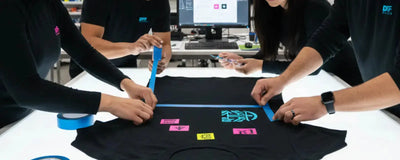
- The Sync-Press Strategy: Tape all your transfers to the garment at once on your prep table. This allows you to slide the garment onto the heat press and hit multiple areas in a single cycle without worrying about film movement.
- Consistency: Tape ensures that the 100th shirt in your run looks identical to the first, a requirement for large corporate contracts.
3. Top Scenarios for Mandatory Taping
While you might eye-ball a center-chest hit, these scenarios require Heat Transfer Tape:
- Curved Surfaces (Hats & Bags): Film naturally slides on curved surfaces. Tape acts as a third hand to hold the design centered during the press.
- Performance Polos: Slippery polyester fabrics offer zero "grip" for the film. Tape prevents the transfer from drifting as you close the platen.
- Neck Labels: Alignment inside the collar must be perfect. Tape ensures your branding isn't crooked, which is the fastest way to spot an amateur print.
4. The Dallas Shop Owner’s Pro-Tips
Maximize your efficiency with these three rules:
- Avoid the Ink: Place tape only on the clear carrier film margins. Placing tape over the ink can cause uneven heat distribution and weaken the adhesive bond.
- Use Polyimide Tape: Only use high-temp polyimide or polyester tape. Standard masking tape will melt, leaving a permanent yellow stain on your garments.
- The Pressure Rule: Apply firm pressure to the tape strips. On textured fabrics like fleece, you need to "rub" the tape in to ensure it grips the fibers.
Precision is the Texas Standard
In the custom apparel world, precision isn't a luxury—it's the baseline. Heat Transfer Tape is a low-cost tool that prevents high-cost errors. By locking down your designs, you ensure every project that leaves your shop meets the Dallas standard of excellence.
Need transfers that match your precision? Don't settle for unstable films. Order your high-definition, stable-carrier gang sheets from DTF Dallas today and experience the gold standard in apparel customization.
FAQ: Precision Alignment
Will transfer tape leave a residue?
Professional-grade Heat Transfer Tape is non-marring. It leaves zero adhesive residue or stains, even on delicate white fabrics, provided you stay within the 280°F–330°F range.
Can I reuse tape strips?
No. High heat weakens the adhesive. For the cost of a few cents per strip, always use fresh tape to avoid a $30 garment ruin.
Is tape necessary for all fabrics?
It is highly recommended for synthetics (Polyester/Nylon) and heavy textures (Fleece). For standard cotton, it is an optional "safety net" but essential for multi-placement.
Comments 0
Be the first to leave a comment.