
The Comeback
In the world of streetwear and modern apparel, a powerful shift is happening. For years, the focus was on the front of the T-shirt, the immediate, face-to-face statement. But look around today, and you'll notice that the most compelling conversations are happening on the other side. The back print, once a staple of subcultures and tour merch, is making a massive and undeniable comeback. This isn't just a fleeting trend; it's a fundamental rethinking of the T-shirt as a canvas for communication. The front is for a subtle introduction; the back is for the bold, unfiltered main event.
This resurgence is about more than just aesthetics. It's a cultural phenomenon driven by our increasingly visual, shareable world. The back of a hoodie or T-shirt has become prime real estate for personal expression, artistic statements, and powerful branding. It's a space that allows for a level of maximalism and narrative depth that a simple chest print can't always accommodate. For apparel brands, understanding the "why" behind this trend is the key to creating products that don't just follow the culture but actively shape it.
This is your deep dive into the comeback of the back print. We'll explore its roots in workwear and rebellion, analyze the modern forces driving its popularity, and break down the key design styles that are dominating the scene. The large-format, highly detailed graphics that define this trend are a perfect showcase for the capabilities of modern, high-quality DTF transfers, making it easier than ever for brands of any size to make a bold statement. It's time to turn your attention to the most powerful canvas in streetwear.

Part One / The Roots
From Workwear and Rebellion to a Streetwear Staple
To understand why the back print is so relevant now, we have to look at its rich and varied history. Its journey from a purely functional element to a symbol of high fashion is a story about identity, community, and the power of a walking billboard.
Utility
Utilitarian Origins on the Backs of Workers and Teams
The very first back prints were born of pure utility. On the backs of construction workers, you'd see the name of their company. On the field, you'd see the name and number of an athlete. On the road, you'd see the bold logo and location of a biker club. In these contexts, the back was the most logical place for clear, unambiguous identification. It was a space to declare your affiliation and your function to the world, a simple statement of "who I am" and "who I belong to."
Subculture
A Canvas for Subculture and Rebellion
In the latter half of the 20th century, this concept of affiliation was co-opted and radicalized by emerging subcultures. The back of a jacket or T-shirt was transformed from a space of conformity into a canvas for rebellion. In the 70s and 80s, punk fans adorned their leather jackets with hand-painted logos of their favorite bands, turning their backs into a middle finger to the mainstream. Skaters in the 80s and 90s used the back of their oversized tees for bold, graphic statements from brands like Powell-Peralta and Santa Cruz. In the golden age of hip-hop, the back of a jacket was a space for elaborate, airbrushed memorials and crew affiliations. In every case, the back print was a loud and proud declaration of identity, visible to everyone as the wearer moved through the world.
Streetwear
The Birth of the "Quiet Front, Loud Back" Formula
As streetwear began to formalize as a fashion movement in the late 90s and 2000s, pioneering brands took this historical language and refined it. They perfected the now-classic formula: a small, subtle logo on the front left chest and a massive, explosive graphic on the back. This created a powerful "if you know, you know" (IYKYK) dynamic. The small front logo was a quiet nod to those in the know, suitable for any situation. The back, however, held the true artistic statement, a reward for those who looked closer. This layout established a sense of duality, the wearer could be understated and bold at the same time.
Part Two / The Why
Analyzing the Resurgence of the Back Print
So, if the back print has such a long history, why is it experiencing such a massive comeback right now? The reasons are deeply tied to our modern digital lives and a collective shift in our desire for expression.
The Unspoken Power of "Photo Dump" Culture
Scroll through any Instagram feed or watch any TikTok travel vlog. How are people most often photographed? In candid, "in the moment" shots, often walking away from the camera, looking at a view, or in a group at a festival. The back of a person's shirt or hoodie gets a surprising amount of screen time in our modern visual language. A simple, blank back is a missed opportunity. A bold, interesting back print, however, transforms a generic photo into a compelling image. It adds a layer of text, art, and personality that makes a photo more "likable" and shareable. Brands and consumers are subconsciously realizing that the back is now just as important, if not more so, than the front for social media visibility.
A Swing Towards Maximalism and Bold Expression
For the better part of a decade, mainstream fashion was dominated by quiet, understated minimalism. But fashion is cyclical, and the pendulum is swinging back with force. Consumers are tired of playing it safe. There is a growing desire for bold, artistic, and expressive clothing that feels unique and personal. The back of a garment is the largest, flattest, and most uninterrupted canvas on the human body, making it the perfect place for this new wave of maximalist expression. It allows for huge, intricate graphics that would be overwhelming or awkward on the front.
The Versatility of "Business in the Front, Party in the Back"
The classic streetwear formula is more relevant than ever. A T-shirt or hoodie with a subtle, small logo on the front is incredibly versatile. It can be worn under an open jacket or blazer without revealing the full design, making it suitable for a wider range of social situations. The wearer has complete control over when to reveal the bold statement piece on their back. This duality allows a single garment to serve multiple purposes, it can be both understated and a conversation starter, depending on the context.
Part Three / The Styles
The Key Back Print Aesthetics Dominating 2025
Understanding that the back print is trending is one thing; knowing what kind of back prints to create is the key to capitalizing on it. Here are the three dominant aesthetics for back prints right now.
Aesthetic 01
The Oversized Typographic Statement
This style is all about the power of words. It features a single word or a short, impactful phrase blown up to enormous proportions, often taking up the entire space from shoulder to shoulder and top to bottom.
- The Look and Feel
- The aesthetic is bold, graphic, and architectural. The text itself becomes the primary artistic element. This style is often seen with trendy, specialty ink effects like puff prints, which give the letters a raised, 3D texture and make the statement even more unmissable.
- Typography Choices
- The fonts are a critical choice. Distorted, experimental sans-serifs, stretched and warped typography, or clean, industrial-style block letters are all popular. The goal is for the font itself to have as much personality as the words it's spelling out.
- The Message
- The phrases are often motivational ("Create the Future"), inspirational ("Seek Discomfort"), ironic ("I'm Trying My Best"), or represent a simple, core value ("Community").
- Why DTF Works
- Modern DTF transfers can be printed in large formats to accommodate these massive designs. While traditional puff printing is a screen printing technique, the visual effect of raised text can be simulated with high-resolution graphics and shadowing. More importantly, DTF allows for perfect, crisp edges on even the most complex and distorted fonts, ensuring the statement is always sharp and readable.
Aesthetic 02
The Full-Scale Artistic Mural
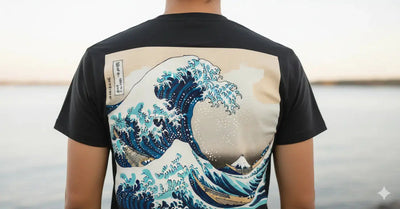
This trend treats the back of the garment as a literal framed canvas for a piece of art. It's less about a simple graphic and more about a full-blown, intricate illustration or photograph.
- The Look and Feel
- This style is expressive, detailed, and often breathtakingly complex. It's a way for the wearer to showcase their unique artistic taste and turn their back into a mobile art gallery.
- Common Themes
- The artistic possibilities are endless. Popular themes include vintage-inspired art like Japanese ukiyo-e woodblock prints, Renaissance paintings, detailed botanical illustrations, surreal photo collages, and modern abstract digital art. The key is that the image is rich, detailed, and worthy of close inspection.
- The Message
- The primary message is an appreciation for art itself. It positions the garment as a premium, thoughtfully designed piece. It says that the wearer is a connoisseur of a particular aesthetic.
- Why DTF Works
- This is the ultimate showcase for the power of DTF Dallas and the DTF process. The ability to print an unlimited number of colors with photorealistic detail is the only way to faithfully reproduce a complex painting, a high-resolution photograph, or an illustration with subtle gradients and textures. DTF allows a level of artistic fidelity that was previously unimaginable for most small-scale apparel brands.
Aesthetic 03
The Nostalgic "Tour Merch" Look
This enduring style taps into the power of nostalgia and the desire to belong to a community or a moment in time. It mimics the classic format of a vintage concert T-shirt.
- The Look and Feel
- This aesthetic feels authentic, lived-in, and full of history (even if it's fictional). It creates an instant sense of community, making the wearer feel like they were part of a special, exclusive event.
- Key Elements
- The formula is iconic: a small, related logo on the front left chest and a large back print. The back print often features a main graphic along with a list of "tour dates" or "locations." For a brand, these locations can be fictional places that are meaningful to their identity, or a list of their pop-up shop appearances.
- The Message
- The core message is one of affiliation and shared experience. It says, "I was there," and "I'm part of this tribe." It's a powerful way to build a loyal community around your brand.
- Why DTF Works
- The key to a convincing vintage tour shirt is the texture. The print needs to look like it has been worn and washed for decades. DTF excels at reproducing high-resolution distressed, faded, and cracked-ink textures that can make a brand-new shirt feel like a rare vintage find.

Part Four / The Details
Your Back Print Design Questions
How big is too big for a back print?
While the trend is maximalist, there are practical limits. A standard full-back print for an adult T-shirt is typically around 12 inches wide by 14-16 inches tall. For oversized hoodies, you can go even larger. The key is to leave at least 2-3 inches of space from the collar and the side seams to ensure a good press and a balanced look.
How do I balance a small front print with a large back print?
The key is thematic connection. The front print should be a "teaser" or a simplified version of the back print. For example, if the back is a huge, detailed illustration of a tiger, the front could be a simple text logo in the same font, or a small icon of a tiger's claw mark. They should feel like they belong to the same design family.
Are back prints popular on garments other than T-shirts?
Absolutely. The back print is arguably even more popular on hoodies and sweatshirts, as the larger, heavier fabric provides an even better canvas. Denim jackets, coach jackets, and even tote bags are also fantastic garments for showcasing a bold back graphic.
Part Five / The Move
Make Your Statement Unforgettable
The resurgence of the back print is a clear signal that consumers are hungry for bold, meaningful, and artistic apparel. It marks a shift away from quiet conformity and a move towards loud, proud self-expression. For your brand, this is an incredible opportunity. By embracing the back of the garment as your primary canvas, you can tell richer stories, create more dynamic products, and tap into a powerful current of modern culture. Don't let your brand's biggest statement be an afterthought.
Your boldest statements deserve the biggest canvas. When it's time to make an impact, our large-format DTF prints ensure your back graphic is as sharp, vibrant, and unforgettable as the idea behind it.